


SAP SE Stock (SAP) Moved Up by 3.20% on Aug 3: A Full Analysis



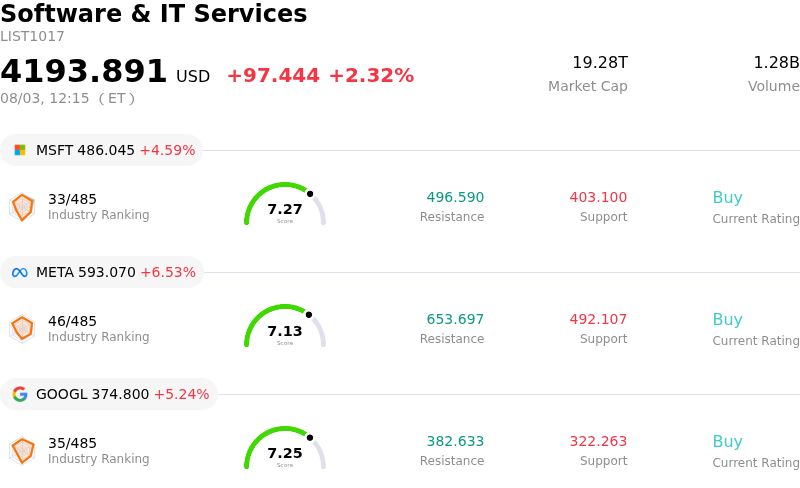
SAP SE (SAP) moved up by 3.20%. The Software & IT Services sector is up by 2.32%. The company outperformed the industry. Top 3 stocks by turnover in the sector: Microsoft Corp (MSFT) up 4.59%; Meta Platforms Inc (META) up 6.53%; Alphabet Inc Class A (GOOGL) up 5.24%.
What is driving SAP SE (SAP)’s stock price up today?
SAP continues to benefit from its aggressive pivot toward a cloud-first business model, a strategy that is increasingly reflecting in its bottom-line performance. The upward movement is primarily driven by robust growth in its Cloud ERP Suite, as enterprise customers accelerate their migration from legacy on-premise systems to cloud environments. This transition is not only providing the company with a more predictable, recurring revenue stream but also expanding its footprint within its existing global customer base.
The integration of generative artificial intelligence into core business applications has served as a significant catalyst for institutional interest. By embedding AI-driven insights directly into financial, supply chain, and human resources workflows, the company has successfully demonstrated a tangible value proposition that justifies higher per-user pricing. Investors are increasingly viewing the company as a primary beneficiary of enterprise AI adoption, particularly as its digital assistant begins to gain widespread traction across various industries.
Recent analyst commentary has also played a pivotal role in boosting market confidence. Several major brokerages have issued upward revisions to their long-term price targets, citing improved operational efficiencies and the success of the ongoing restructuring program. These adjustments highlight the company’s ability to scale its cloud operations while simultaneously improving operating margins, a combination that remains highly attractive to value-oriented growth investors in the current macroeconomic environment.
Furthermore, the broader market sentiment toward high-quality software-as-a-service providers has remained positive, especially as enterprises prioritize digital transformation budgets despite broader economic uncertainties. The company’s strategic focus on the RISE with SAP initiative continues to de-risk its long-term revenue outlook, providing a solid foundation for the recent uptick in buy-side activity. This institutional accumulation reflects a growing consensus that the firm is well-positioned to maintain its leadership in the global enterprise resource planning market.
Technical Analysis of SAP SE (SAP)
Technically, SAP SE (SAP) shows a MACD (12,26,9) value of 7.502, indicating a buy signal. The RSI at 64.604 suggests neutral condition and the Williams %R at 11.939 suggests overbought condition. Please monitor closely.
Fundamental Analysis of SAP SE (SAP)
SAP SE (SAP) is in the Software & IT Services industry. Its latest annual revenue is $41.49B, ranking 14 in the industry. The net profit is $8.07B, ranking 13 in the industry. Company Profile
Over the past month, multiple analysts have rated the company as Buy, with an average price target of $253.74, a high of $367.98, and a low of $154.99.
More details about SAP SE (SAP)
Company Specific Risks:
- Department of Justice Investigation: Recent reports of an expanded US DOJ probe into potential price-fixing and bid-rigging involving SAP and Carahsoft regarding sales to government agencies have triggered investor concerns over legal liability and potential exclusion from federal contracts.
- Restructuring Financial Impact: The ongoing execution of the 2024 transformation program, involving approximately 10,000 job restructurings, continues to incur significant one-time GAAP expenses that pressure bottom-line margins and create operational disruption during the transition.
- Cloud Backlog Deceleration: Institutional analysts have flagged risks regarding the sustainability of cloud backlog growth rates if legacy on-premise customers resist migration to the S/4HANA Cloud platform or opt for competitors during the transition phase.
- Macro-Driven Spending Delays: Sustained economic weakness in the German domestic market and broader Eurozone has led to reports of deferred enterprise software procurement cycles, threatening short-term license revenue and cloud conversion targets.
This article may include AI-generated content that is human-reviewed, which is for reference and general information purposes only and does not constitute investment advice.
Recommended Articles






Comments (0)
Click the $ button, enter the symbol, and select to link a stock, ETF, or other ticker.