


AstraZeneca PLC Stock (AZN) Moved Down by 8.54% on Aug 3: Key Drivers Unveiled



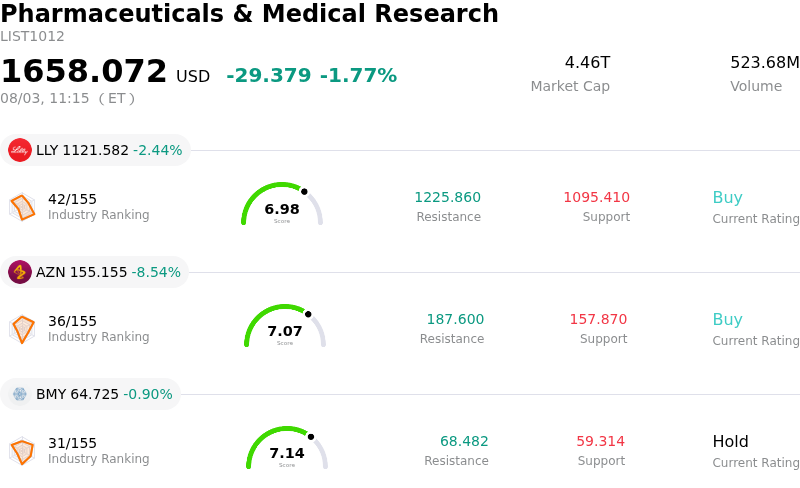
AstraZeneca PLC (AZN) moved down by 8.54%. The Pharmaceuticals & Medical Research sector is down by 1.77%. The company underperformed the industry. Top 3 stocks by turnover in the sector: Eli Lilly and Co (LLY) down 2.44%; AstraZeneca PLC (AZN) down 8.54%; Bristol-Myers Squibb Co (BMY) down 0.90%.
What is driving AstraZeneca PLC (AZN)’s stock price down today?
AstraZeneca is experiencing significant downward pressure today following a disappointing clinical trial update regarding one of its high-profile oncology candidates. The market is reacting to data indicating that a key Phase 3 study failed to meet its primary endpoint of statistically significant improvement in overall survival. Because this specific therapy was viewed by many analysts as a cornerstone of the company’s next-generation growth strategy, the setback has prompted a swift revaluation of the long-term revenue pipeline. The loss of expected high-margin cash flows from this asset has created a vacuum in investor confidence that is currently driving the sell-off.
Adding to the negative momentum are growing concerns surrounding the regulatory environment in the United States. Recent updates regarding drug price negotiations under the Inflation Reduction Act have signaled tighter pricing controls on several of the company’s top-selling cardiovascular and metabolic medications. Investors are increasingly wary that these mandated price adjustments will compress margins more severely than previously modeled. This macro-regulatory headwind, combined with the specific clinical miss, has led several prominent brokerage firms to revise their price targets and lower their ratings from buy to neutral, triggering automated sell orders across institutional desks.
The broader pharmaceutical sector is also facing a period of rotation as market participants shift capital toward growth sectors with less immediate regulatory risk. For a heavy hitter like AstraZeneca, which relies heavily on institutional stability, the combination of pipeline uncertainty and unfavorable analyst commentary has breached key technical support levels. This technical breakdown likely accelerated the intraday volatility as trend-following algorithms and exchange-traded funds rebalanced their exposure. While the company maintains a diverse portfolio, the convergence of clinical, regulatory, and technical factors has created a perfect storm for the current price retreat.
Technical Analysis of AstraZeneca PLC (AZN)
Technically, AstraZeneca PLC (AZN) shows a MACD (12,26,9) value of 0.828, indicating a neutral signal. The RSI at 43.137 suggests neutral condition and the Williams %R at 49.157 suggests neutral condition. Please monitor closely.
Fundamental Analysis of AstraZeneca PLC (AZN)
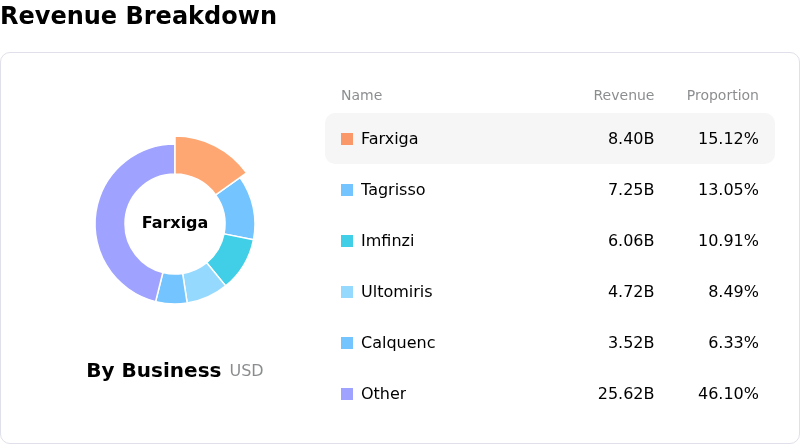
AstraZeneca PLC (AZN) is in the Pharmaceuticals & Medical Research industry. Its latest annual revenue is $58.74B, ranking 8 in the industry. The net profit is $10.22B, ranking 6 in the industry. Company Profile
Over the past month, multiple analysts have rated the company as Buy, with an average price target of $217.03, a high of $250.69, and a low of $184.00.
More details about AstraZeneca PLC (AZN)
Company Specific Risks:
- Escalating China Regulatory Probe: The detention of AstraZeneca’s China President, Leon Wang, by Chinese authorities has intensified concerns regarding a widening investigation into illegal drug imports and insurance fraud, threatening the stability of the company’s second-largest revenue-generating market.
- Clinical Pipeline Setbacks: Recent updates on the Dato-DXd (datopotamab deruxtecan) clinical trials have shown a lack of statistically significant overall survival (OS) benefit in unselected patient populations, leading analysts to downwardly revise the peak sales potential for this key oncology asset.
- Operating Margin Compression: Significant increases in Selling, General, and Administrative (SG&A) expenses and R&D investment for high-stakes late-stage trials are creating short-term pressure on operating margins, triggering institutional concern over earnings quality despite top-line revenue growth.
- Geopolitical Revenue Concentration: With approximately 13% of global revenue derived from China, the ongoing legal uncertainty and potential for retaliatory regulatory measures pose a systemic risk to the firm’s long-term growth guidance and emerging market strategy.
This article may include AI-generated content that is human-reviewed, which is for reference and general information purposes only and does not constitute investment advice.
Recommended Articles









Comments (0)
Click the $ button, enter the symbol, and select to link a stock, ETF, or other ticker.