


Linde PLC Stock (LIN) Moved Down by 5.66% on Jul 31: Drivers Behind the Movement



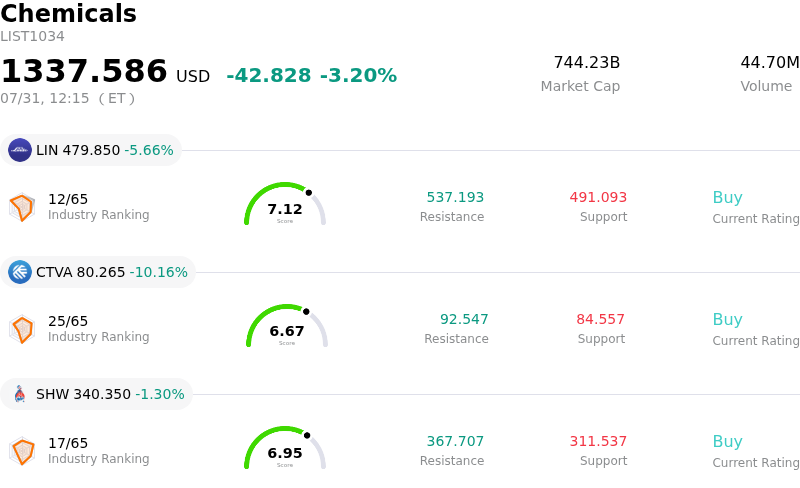
Linde PLC (LIN) moved down by 5.66%. The Chemicals sector is down by 3.20%. The company underperformed the industry. Top 3 stocks by turnover in the sector: Linde PLC (LIN) down 5.66%; Corteva Inc (CTVA) down 10.16%; Sherwin-Williams Co (SHW) down 1.30%.
What is driving Linde PLC (LIN)’s stock price down today?
Linde’s significant downward movement today is primarily attributed to the release of its second-quarter earnings report, which, despite showing bottom-line resilience, featured a cautious revision to its full-year sales volume guidance. Investors are reacting sharply to management’s commentary regarding a cooling industrial environment, particularly within the European and Chinese markets. The industrial gas leader, often viewed as a bellwether for global manufacturing health, signaled that demand for merchant gases used in metal fabrication and electronics has begun to plateau earlier than anticipated.
The volatility is further exacerbated by margin pressures within the company’s clean energy transition projects. While Linde has been a primary beneficiary of hydrogen subsidies and decarbonization initiatives, the capital expenditure required for these long-term projects is beginning to weigh on short-term free cash flow projections. Institutional investors appear to be recalibrating their positions as the premium valuation Linde typically commands over its peers faces scrutiny in a macroeconomic environment where industrial growth consistency is no longer guaranteed.
From a structural perspective, the recent uptick in regional energy costs has introduced new uncertainties for Linde’s onsite gas production facilities. Although the company employs robust pass-through pricing mechanisms to protect margins, the lag time in these adjustments often results in short-term earnings friction. This friction, combined with a broader sector rotation out of materials and into high-growth tech or defensive staples, has triggered a wave of programmatic selling. The intraday volatility reflects a shift in the market narrative from Linde as a steady compounder to a firm navigating cyclical headwinds in its core end-markets.
Furthermore, analyst updates following the earnings call have been cautious, with several major brokerage firms lowering their near-term price targets. The primary concern cited by research desks is the potential for a prolonged slump in the semiconductor segment, which has historically provided high-margin growth for Linde’s specialty gas division. As long-term growth assumptions are adjusted downward, the stock is experiencing a valuation reset that is being amplified by technical selling as specific moving average supports are tested.
Technical Analysis of Linde PLC (LIN)
Technically, Linde PLC (LIN) shows a MACD (12,26,9) value of -2.630, indicating a sell signal. The RSI at 44.873 suggests neutral condition and the Williams %R at 78.451 suggests sell condition. Please monitor closely.
Media Coverage of Linde PLC (LIN)
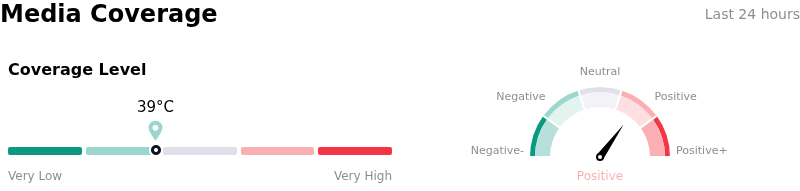
In terms of media coverage, Linde PLC (LIN) shows a coverage score of 39, indicating a low level of media attention. The overall market sentiment index is currently in bullish zone.
Fundamental Analysis of Linde PLC (LIN)
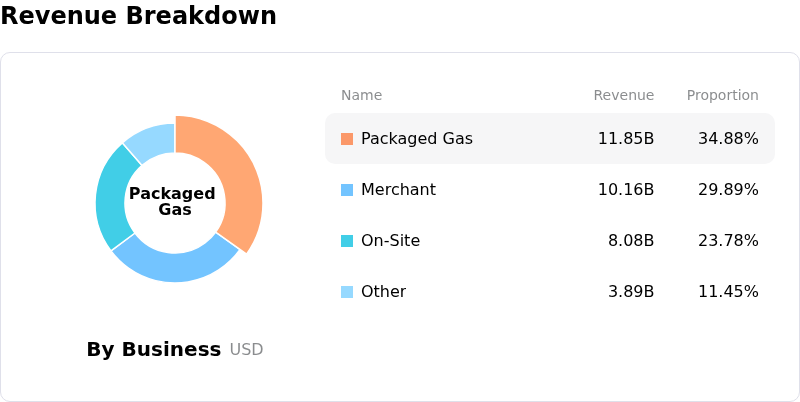
Linde PLC (LIN) is in the Chemicals industry. Its latest annual revenue is $33.99B, ranking 2 in the industry. The net profit is $6.90B, ranking 1 in the industry. Company Profile
Over the past month, multiple analysts have rated the company as Buy, with an average price target of $546.01, a high of $622.00, and a low of $400.00.
More details about Linde PLC (LIN)
Company Specific Risks:
- Revenue Underperformance and Missed Estimates: Linde's recent quarterly filing revealed revenue of $8.27 billion, failing to meet the $8.39 billion consensus estimate, which indicates a softening in top-line momentum and difficulty in capturing projected market share in a tightening economy.
- Stagnant Underlying Volume Growth: Management reported flat (0%) volume growth across key industrial segments, suggesting that current earnings quality is heavily reliant on aggressive pricing strategies rather than organic demand, a trend that institutional analysts view as unsustainable if industrial output continues to stall.
- Geographic Exposure to Manufacturing Slump: Significant operational exposure to the EMEA and APAC regions poses a downside risk as manufacturing PMIs in Germany and China remain in contraction territory, directly threatening the conversion of the company's multi-billion dollar project backlog into realized revenue.
- Regulatory and Subsidy Uncertainty: Persistent ambiguity regarding the U.S. Treasury's final guidance on Section 45V clean hydrogen tax credits creates execution risk for Linde's extensive "blue" and "green" hydrogen investment pipeline, potentially impacting the long-term internal rate of return (IRR) for capital-intensive projects.
This article may include AI-generated content that is human-reviewed, which is for reference and general information purposes only and does not constitute investment advice.
Recommended Articles








Comments (0)
Click the $ button, enter the symbol, and select to link a stock, ETF, or other ticker.