


Morgan Stanley Stock (MS) Moved Down by 3.74% on Jul 29: Facts Behind the Movement



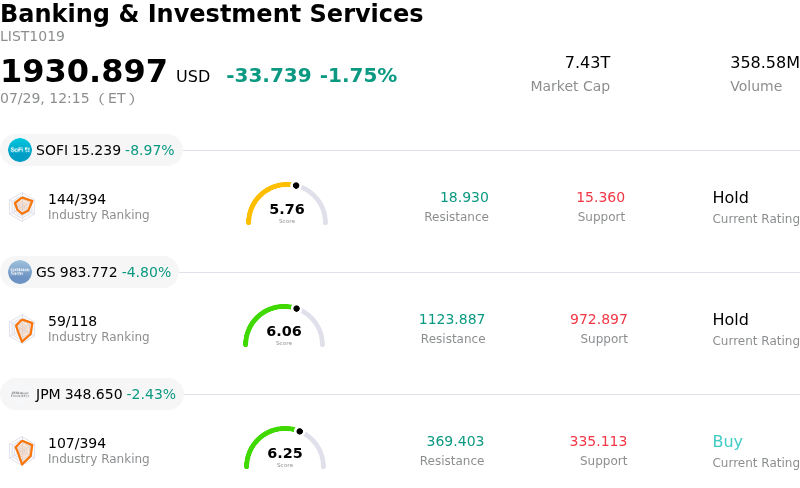
Morgan Stanley (MS) moved down by 3.74%. The Banking & Investment Services sector is down by 1.75%. The company underperformed the industry. Top 3 stocks by turnover in the sector: SoFi Technologies Inc (SOFI) down 8.97%; Goldman Sachs Group Inc (GS) down 4.80%; JPMorgan Chase & Co (JPM) down 2.43%.
What is driving Morgan Stanley (MS)’s stock price down today?
Morgan Stanley is experiencing a notable downward trajectory during today's session, largely driven by a shift in macroeconomic expectations following the latest Federal Reserve policy communications. As the market digests the central bank's stance on interest rates, financial institutions with significant exposure to capital markets are facing renewed pressure. The prospect of sustained high borrowing costs continues to dampen the outlook for equity underwriting and merger and acquisition volumes, which are critical drivers for the firm's institutional securities division.
Beyond the broader macro backdrop, recent industry-wide data suggests a cooling in wealth management net flows. For Morgan Stanley, which has heavily pivoted toward a wealth and investment management-centric model, any signs of margin compression or a slowdown in client asset growth are met with investor skepticism. The current environment of heightened market volatility has also led to a more defensive positioning among institutional holders, resulting in significant intraday selling pressure on major banking stocks.
Specific sector dynamics are also playing a role in today's performance. Recent earnings reports from across the financial services landscape have highlighted rising operational expenses and a normalization of trading revenues from the windfall levels seen in previous years. Investors are increasingly concerned that the peak of the current cycle for investment banking may have passed, leading to a de-rating of valuation multiples across the peer group. This sentiment is further exacerbated by ongoing regulatory discussions regarding capital requirements, which could limit future share buybacks and dividend growth.
From a technical perspective, the breach of key support levels has triggered automated selling programs, accelerating the downward movement throughout the day. Institutional portfolio adjustments are likely contributing to the volatility as funds rebalance their exposure to the financial sector in anticipation of a potential economic slowdown. While the firm's long-term fundamental story remains centered on its stable wealth management revenue, the immediate market reaction reflects a cautious stance toward cyclical risks and interest rate uncertainty.
Technical Analysis of Morgan Stanley (MS)
Technically, Morgan Stanley (MS) shows a MACD (12,26,9) value of -2.748, indicating a neutral signal. The RSI at 44.608 suggests neutral condition and the Williams %R at 82.804 suggests oversold condition. Please monitor closely.
Media Coverage of Morgan Stanley (MS)
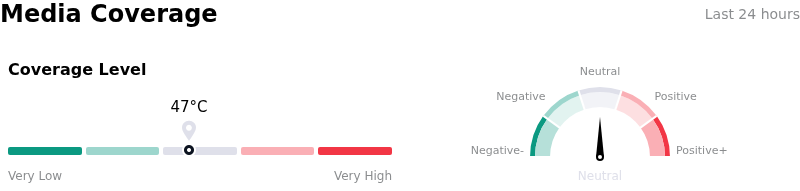
In terms of media coverage, Morgan Stanley (MS) shows a coverage score of 47, indicating a moderate level of media attention. The overall market sentiment index is currently in neutral zone.
Fundamental Analysis of Morgan Stanley (MS)
Morgan Stanley (MS) is in the Banking & Investment Services industry. Its latest annual revenue is $114.74B, ranking 3 in the industry. The net profit is $16.25B, ranking 2 in the industry. Company Profile
Over the past month, multiple analysts have rated the company as Buy, with an average price target of $235.79, a high of $262.00, and a low of $145.00.
More details about Morgan Stanley (MS)
Company Specific Risks:
- Regulatory Oversight of Wealth Management: Continued federal investigations by the SEC, OCC, and Department of Treasury into the firm’s anti-money laundering (AML) controls and client-vetting processes within the wealth management division pose significant legal and reputational threats.
- Leadership Transition Uncertainty: The announcement of Executive Chairman James Gorman's planned departure by the end of 2024 introduces execution risk as the firm navigates a full management handover, potentially impacting strategic continuity in the wealth and investment management segments.
- Net Interest Income (NII) Compression: Persistent "cash sorting" behavior, where wealth management clients migrate funds from low-yield sweep accounts into higher-yielding alternatives, is putting downward pressure on net interest margins and overall segment profitability.
- Commercial Real Estate (CRE) Credit Exposure: Heightened sensitivity to the struggling office real estate market necessitates increased provisions for credit losses, as defaults in the CRE sector continue to threaten the stability of the firm's lending portfolio.
This article may include AI-generated content that is human-reviewed, which is for reference and general information purposes only and does not constitute investment advice.
Recommended Articles








Comments (0)
Click the $ button, enter the symbol, and select to link a stock, ETF, or other ticker.