


WTI Futures (USOIL-F) Volatility Intensified on Jul 12: What to Watch



WTI Futures (USOIL-F) is up 3.35% at Jul 12 18:20(ET), now at $73.83, with a 7-day up of 7.42%.
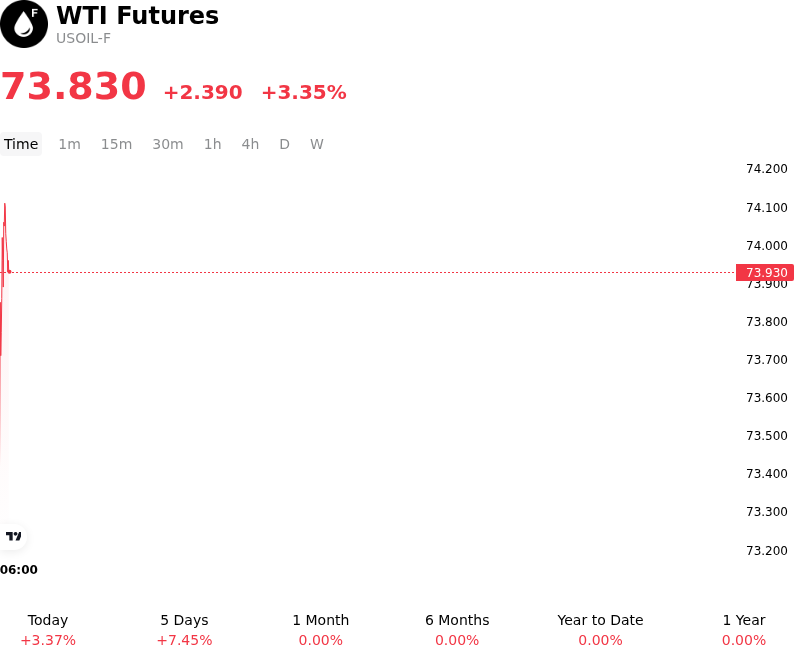
What is driving WTI Futures (USOIL-F)’s stock price up today?
The advance in WTI crude oil prices is primarily driven by an escalation in geopolitical risk premiums alongside evidence of a tightening physical market during the peak summer demand period. Reports of increased friction in the Middle East, specifically regarding security threats to energy infrastructure in the Persian Gulf, have prompted institutional investors to re-establish long positions. This renewed focus on supply security has outweighed previous macroeconomic concerns, as the market anticipates a potential disruption to key transit routes at a time when global spare capacity remains concentrated among a few producers.
Supply-side constraints are being further exacerbated by weather-related disruptions in the Gulf of Mexico. The development of a major tropical system has forced the evacuation of several offshore production platforms and the temporary closure of coastal refinery facilities. This proactive reduction in output comes as OPEC+ continues to demonstrate strong adherence to production quotas, effectively limiting the global supply cushion. The convergence of these factors has led to a rapid repricing of the near-term supply-demand balance, particularly as data indicates that commercial inventories are drawing down faster than historical seasonal norms.
On the demand front, high refinery run rates in the United States and Europe suggest robust consumption for transportation fuels. The summer driving season is currently at its peak, and recent data on air travel volume indicates a resilient demand for distillates. These micro-fundamentals are receiving additional tailwinds from a softening US dollar. Market expectations for a shift in Federal Reserve policy toward a more neutral stance have gathered momentum, lowering the cost of dollar-denominated commodities for international buyers and supporting broader risk-on sentiment across the energy complex.
The current price action reflects a structural repricing of risk rather than a mere technical correction. While the immediate catalyst is the combination of geopolitical tension and weather-related supply risks, the underlying support is provided by the ongoing deficit in the global crude balance. Market participants are now closely monitoring the duration of the production shut-ins in the Gulf and the potential for a more permanent shift in the geopolitical landscape, both of which could sustain the current upward trajectory in the medium term.
More details about WTI Futures (USOIL-F)
Recent Events and Risks:
- Unexpected Crude Inventory Builds: Recent weekly data from the Energy Information Administration (EIA) showed a larger-than-anticipated build in US commercial crude oil and gasoline inventories, signaling a slowdown in domestic refining demand and pressuring near-term futures prices.
- China Economic Demand Concerns: Continued weakness in China’s manufacturing and property sectors, compounded by fiscal stimulus measures that have yet to translate into higher physical energy demand, is creating significant downside risk for global consumption forecasts.
- Geopolitical Risk Premium Unwinding: As diplomatic efforts intensify to stabilize regional conflicts in the Middle East, the immediate "war risk premium" is eroding, leading to forced liquidations by speculators who had entered long positions on expectations of supply disruptions.
- US Dollar Strength and Macro Headwinds: A surging US Dollar Index (DXY) following recent inflation data has made dollar-denominated WTI more expensive for international buyers, triggering broad-based "risk-off" flows and technical selling at key resistance levels.
This article may include AI-generated content that is human-reviewed, which is for reference and general information purposes only and does not constitute investment advice.
Recommended Articles






Comments (0)
Click the $ button, enter the symbol, and select to link a stock, ETF, or other ticker.