


Palladium (XPDUSD) Is down 2.03% on Jun 18: What You Need to Watch



Palladium (XPDUSD) is down 2.03% at Jun 18 05:10(ET), now at $1288.45, with a 7-day up of 1.72%.
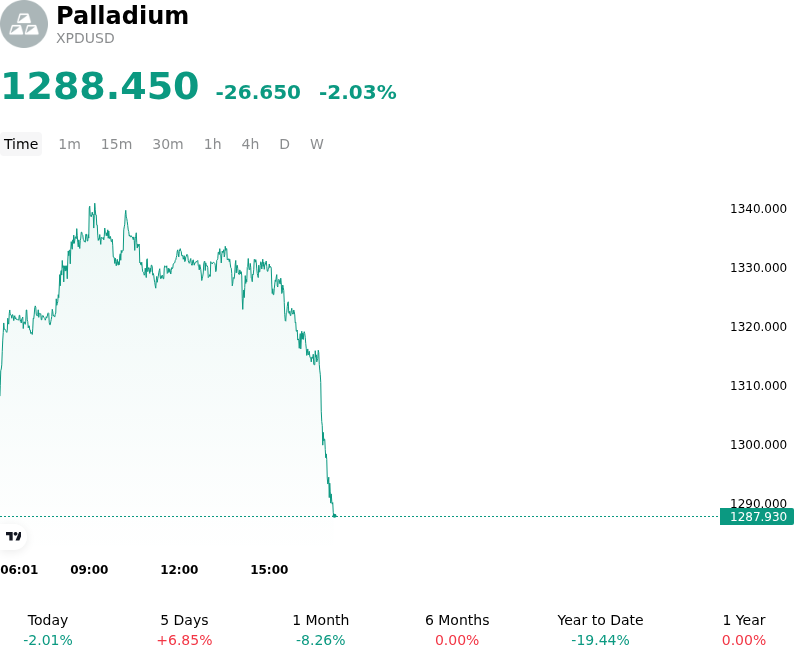
What is driving Palladium (XPDUSD)’s stock price down today?
The recent downturn in palladium prices is primarily attributed to a major hawkish shift in U.S. Federal Reserve monetary policy expectations, which has reinvigorated the U.S. dollar and pushed global bond yields higher. While the Federal Open Market Committee maintained the benchmark interest rate at its June meeting, the updated Summary of Economic Projections delivered a hawkish surprise to the markets. The central bank's new dot plot revealed that a majority of policymakers now anticipate at least one additional rate hike before the end of the year, raising the median year-end interest rate projection. Concurrently, the Fed revised its end-of-year inflation outlook higher, indicating that monetary policy will remain restrictive for longer. This hawkish tilt drove a sharp appreciation in the U.S. dollar and elevated Treasury yields, reducing the appeal of non-yielding commodities and triggering a broad liquidation across the precious and industrial metals complexes.
In addition to monetary headwinds, an easing of the geopolitical risk premium has contributed to the price correction. The signing of a preliminary peace agreement between the United States and Iran, aimed at resolving the Middle East conflict and reopening the critical Strait of Hormuz, has successfully defused a key market concern. While the prospect of normalized shipping routes and lower energy prices initially supported global industrial sentiment, the actualization of the accord prompted a substantial unwinding of defensive, safe-haven positioning. As systemic risk subsided, speculative capital flowed out of the metals sector, leaving palladium highly vulnerable to macro-driven profit-taking.
Furthermore, long-term structural supply-demand dynamics continue to cap palladium's upside. Unlike gold and silver, which are highly sensitive to financial flows, palladium remains heavily dependent on fabrication demand within the automotive sector, where it is utilized in catalytic converters for gasoline engines. The platinum-group metals market continues to digest forecasts of a structural transition, with analysts expecting the palladium market's current deficit to shift to a surplus in the coming years due to accelerating substitution by cheaper platinum and the broader secular transition toward battery-electric vehicles. In the absence of a tight physical market or a supportive interest rate environment, these structural headwinds, combined with a stronger dollar and hawkish rate expectations, have intensified near-term selling pressure on the metal.
Technical Analysis of Palladium (XPDUSD)
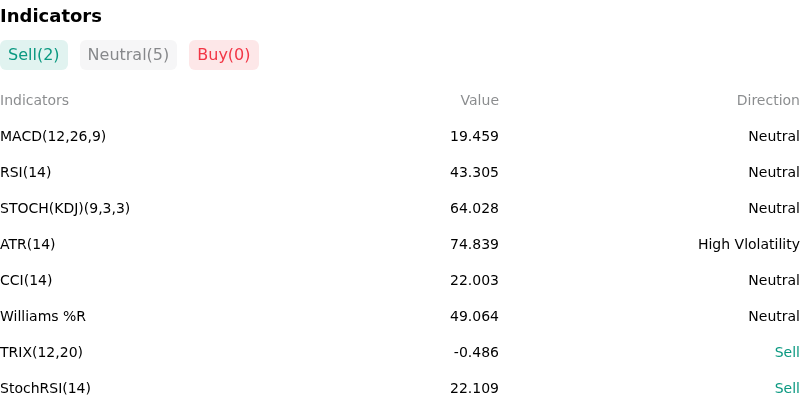
Technically, Palladium (XPDUSD) shows a MACD (12,26,9) value of 19.459, indicating a neutral signal. The RSI at 43.305 suggests neutral condition and the Williams %R at 49.064 suggests neutral condition. Please monitor closely.
More details about Palladium (XPDUSD)
Recent Events and Risks:
- Removal of Trade Policy Risk Premium: The U.S. International Trade Commission (USITC) issued a negative determination finding that Russian unwrought palladium imports do not injure domestic producers, effectively terminating the anti-dumping and countervailing duty investigations. This ruling has stripped the market of a key geopolitical risk premium that had previously driven up prices on fears of proposed 241% combined import tariffs.
- Cooling Automotive and Industrial Demand: Intraday spot palladium prices have slipped over 1.8% to around $1,337 per ounce, weighed down by deteriorating global automotive and industrial sentiment. The structural transition toward battery electric vehicles (BEVs) is steadily eroding baseline demand for gasoline-engine catalytic converters.
- Widening 2026 Global Market Surplus: Institutional commodity strategists remain highly concerned about a widening global supply surplus for 2026. UBS recently lowered its palladium price target to $1,400 per ounce citing an oversupply outlook, and Heraeus Precious Metals has warned that rising secondary recycling rates alongside falling automotive consumption present significant downside risk.
- Macro Sell-Off and Reduced Inflation Expectations: Easing geopolitical tensions, driven by an interim U.S.-Iran peace deal that pulled Brent crude oil prices lower, have systematically reduced global inflation expectations. This broader commodity risk-off sentiment has dampened speculative interest and investor inflows across the PGMs sector.
This article may include AI-generated content that is human-reviewed, which is for reference and general information purposes only and does not constitute investment advice.
Recommended Articles






Comments (0)
Click the $ button, enter the symbol, and select to link a stock, ETF, or other ticker.