


GBP/USD (GBPUSD) Volatility Intensified on Jun 17: Factors to Watch



GBP/USD (GBPUSD) is down 0.55% at Jun 17 14:10(ET), now at $1.33501, with a 7-day down of 0.13%.
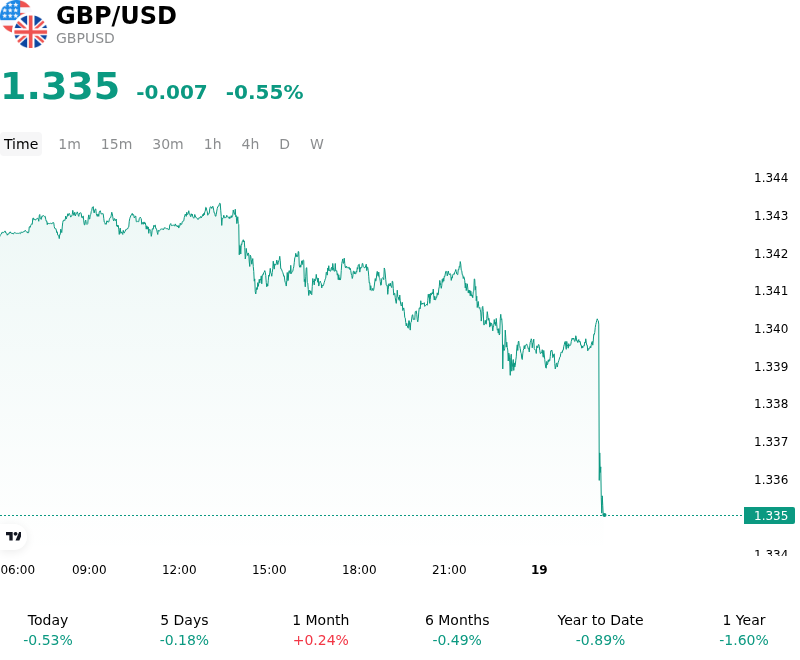
What is driving GBP/USD (GBPUSD)’s stock price down today?
The decline in the GBPUSD currency pair was primarily driven by a divergence in macroeconomic data and central bank policy expectations between the United Kingdom and the United States. A combination of softer-than-expected UK inflation data and blockbuster US retail sales figures created a powerful bearish catalyst for the pair, boosting the US dollar while undermining sterling.
In the United Kingdom, consumer price index data revealed that headline inflation unexpectedly held steady at 2.8 percent in May. Financial markets had widely anticipated a rise to 3.0 percent, driven by recent energy price volatility. The softer inflation print, alongside a weak domestic labor market and declining food prices, significantly eased the pressure on the Bank of England to pursue preemptive policy tightening. Investors reacted by trimming their expectations for any rate hikes later in the year, cementing expectations for the central bank to maintain its benchmark interest rate at 3.75 percent at its upcoming meeting. This dovish shift in domestic rate expectations immediately weighed on sterling.
Conversely, the US dollar gathered strong upward momentum following a highly resilient US retail sales report. US retail sales jumped by 0.9 percent in May, comfortably beating market forecasts of a 0.5 percent increase. The robust performance was further supported by a strong reading in the core control group, demonstrating the ongoing strength of the American consumer despite recent geopolitical uncertainties. This positive economic surprise raised concerns that demand-driven inflation pressures could persist in the United States, providing the Federal Reserve with substantial leeway to maintain a restrictive policy stance. The strong data also added hawkish ammunition ahead of the Federal Open Market Committee's interest rate decision, boosting US Treasury yields and driving broad-based demand for the greenback.
Additionally, easing geopolitical tensions in the Middle East, marked by a preliminary agreement to reopen the Strait of Hormuz, contributed to a collapse in global energy prices. While lower oil prices offered a dovish signal to central banks globally, the immediate market impact was felt more acutely in the UK, where it further diminished the perceived necessity for the Bank of England to raise rates to combat imported inflation. As interest rate differentials and economic growth outlooks shifted in favor of the United States, capital flows favored the US dollar over the pound, reinforcing the downward trend in the GBPUSD exchange rate.
Technical Analysis of GBP/USD (GBPUSD)
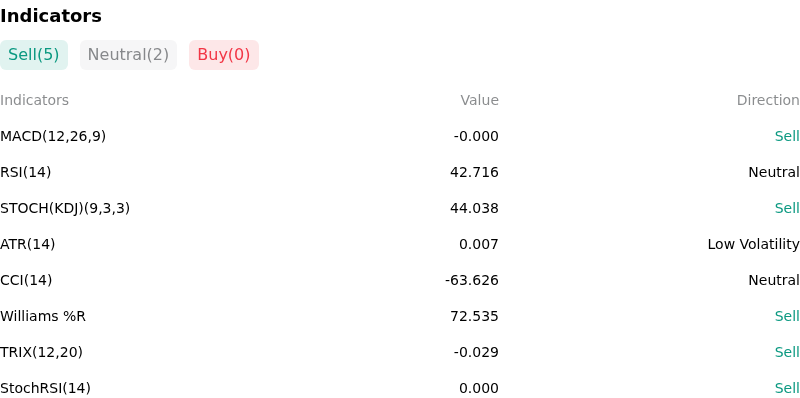
Technically, GBP/USD (GBPUSD) shows a MACD (12,26,9) value of -0.000, indicating a sell signal. The RSI at 42.716 suggests neutral condition and the Williams %R at 72.535 suggests sell condition. Please monitor closely.
More details about GBP/USD (GBPUSD)
Recent Events and Risks:
- Downside UK Inflation Surprise: UK Consumer Price Index (CPI) inflation for May unexpectedly held steady at 2.8% on June 17, 2026, missing the market consensus of 3.0%. Driven by core goods disinflation and falling food costs, this downside surprise has cooled near-term Bank of England (BoE) rate hike expectations and triggered immediate intraday selling pressure on Sterling.
- Dovish Policy Risk Ahead of the June 18 BoE Decision: The soft inflation print, coupled with a weakening UK labor market and rising redundancy notifications, gives the BoE room to wait at its upcoming policy meeting. Any dovish messaging from the Monetary Policy Committee (MPC) or a dilution of its active tightening bias could lead to a sudden unwinding of long Sterling positions.
- Potential Hawkish Fed Guidance Under New Chair Kevin Warsh: The Federal Reserve's June 17 policy decision marks the first session led by Chair Kevin Warsh. With US CPI stubbornly high at 4.2% and a highly resilient labor market, there is a strong risk that the Fed drops its easing bias or shifts its "dot plot" toward potential rate hikes later this year, fueling a major US Dollar rally and crushing GBP/USD.
- Structural Growth Fragility and UK Political Headwinds: Recent indicators showing a 0.1% contraction in UK GDP, alongside localized political uncertainty surrounding the upcoming Makerfield by-election on "Super Thursday", continue to highlight structural economic challenges. This weak domestic backdrop limits the Pound's resilience to external shocks and leaves it highly vulnerable to risk-off capital flows.
This article may include AI-generated content that is human-reviewed, which is for reference and general information purposes only and does not constitute investment advice.
Recommended Articles







Comments (0)
Click the $ button, enter the symbol, and select to link a stock, ETF, or other ticker.