


Why Japan's massive foreign assets could be the Japanese Yen's long-awaited catalyst



The Japanese Yen (JPY) continues to trade in defensive territory, with the USD/JPY pair pinned near a historic 40-year high around 162.00. However, in a striking divergence from rising global yields, Japanese Government Bonds (JGBs) have begun outperforming.
This sudden resilience is being supported by verbal interventions from Japanese policymakers, who are signaling plans to redirect the country's massive domestic savings pool and pension assets back into home markets. Should these structural reforms materialize, global banks warn that a powerful wave of capital repatriation could reshape the Yen's long-term trajectory.
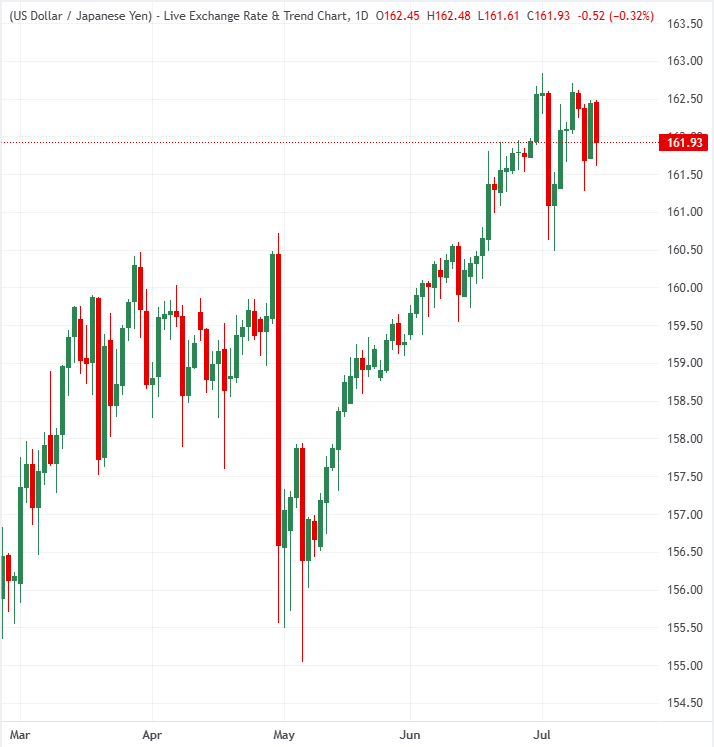
Policymakers look to unlock Japan's retail savings to anchor JGBs
While global government bond yields have faced upward pressure from rising energy prices, domestic yields in Japan have bucked the trend. Analysts at MUFG point out that JGBs are finding a strong anchor in verbal interventions, with Finance Minister Satsuki Katayama and Health, Labour and Welfare Minister Kenichiro Ueno hinting at upcoming policy shifts. By floating tax-advantaged treatments for individual investors and suggesting a strategic review of public pension holdings, authorities hope to make yen-denominated assets structurally more attractive.
Taken together, the comments from overnight will further encourage speculation that Japan’s huge savings could be better utilized to provide more support for JGBs and the yen.
The power of a potential rebalancing of the government pension investment fund
Brown Brothers Harriman (BBH) highlights stellar demand at a recent 20-year JGB auction, where yields plummeted by 18 basis points to 3.56% on an exceptional average bid-to-cover ratio of 4.52. This buying surge coincides with proposals to include government bonds in Japan's tax-free retail investment program and to potentially rebalance the massive ¥294 trillion ($1.8 trillion) Government Pension Investment Fund (GPIF).
Currently, the GPIF operates on a strict allocation split equally at 25% across domestic and foreign stocks and bonds. Because Japan commands a colossal $3.6 trillion net foreign asset position – equivalent to roughly 83% of its GDP – even a marginal adjustment of these targets would trigger a massive structural repatriation of capital back into JPY.
Japan is one of the world’s largest net creditor with net foreign assets totaling roughly $3.6 trillion in Q1 or 83% of GDP. As such, even a modest portfolio repatriation could generate meaningful JPY and JGB demand.
What does this mean for the Japanese Yen?
The banks project an upward-biased medium-term trajectory for the Japanese Yen, driven by a potential sea change in domestic investment policy. MUFG highlights that the government's active campaign to encourage local households to invest at home will act as a durable backstop for local assets. BBH notes that while USD/JPY remains elevated in the 162.00s, the sheer scale of Japan's overseas wealth means any tangible follow-through on GPIF portfolio rebalancing or tax incentives will serve as a catalyst to drive a Yen recovery.
(This article was created with the help of an Artificial Intelligence tool and reviewed by an editor. Know more.)
Recommended Articles







Comments (0)
Click the $ button, enter the symbol, and select to link a stock, ETF, or other ticker.