


Ethereum activates Glamsterdam on Sepolia testnet: Why the price is falling anyway



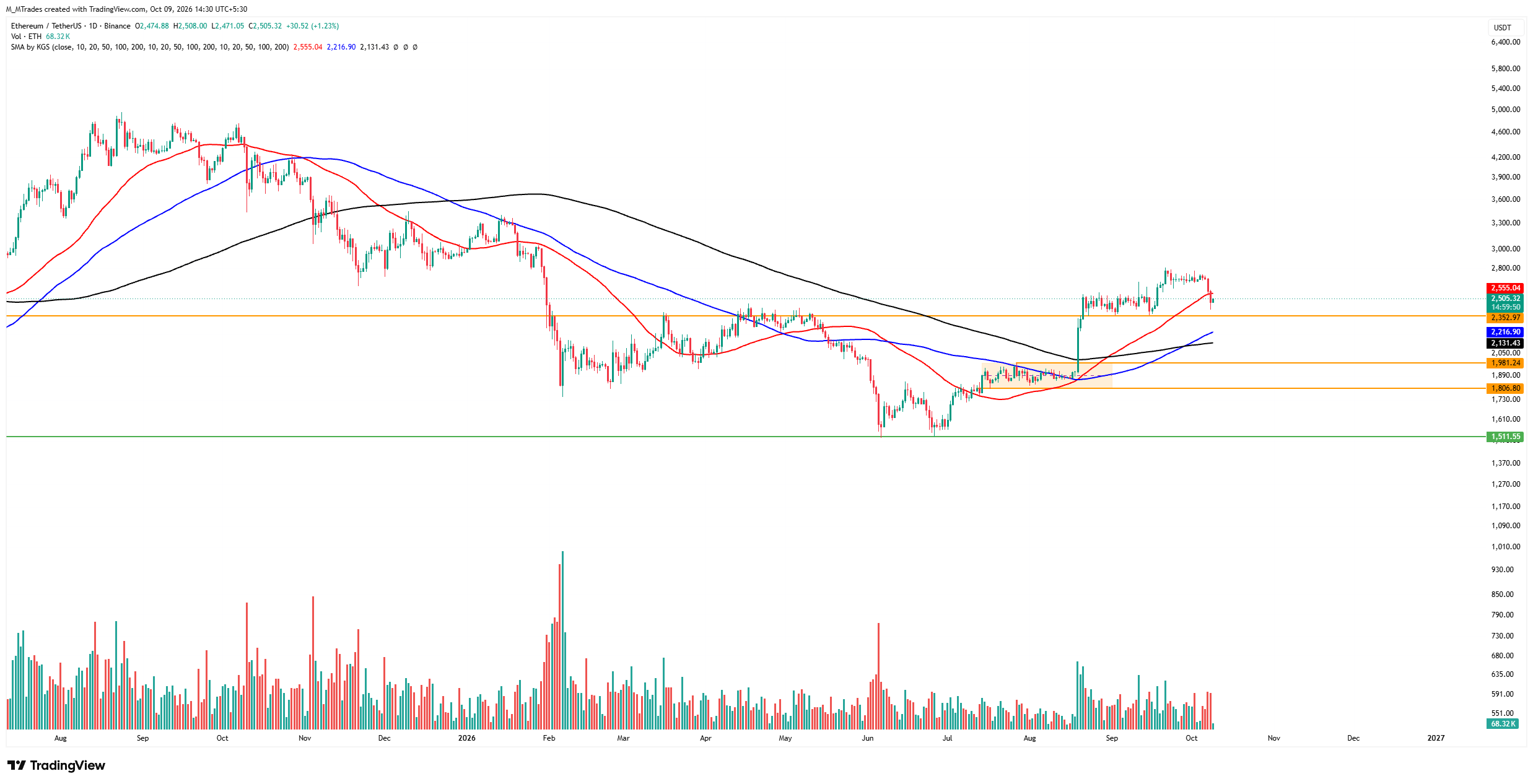
Ethereum (ETH) has reached a key milestone in its next major network upgrade. The planned changes aim to improve Ethereum’s Layer 1 capacity and efficiency as network activity grows. The development comes as ETH retreats toward $2,500, highlighting the contrast between the network’s long-term technical progress and its short-term market weakness.
Ethereum developers successfully activated the Glamsterdam upgrade on the Sepolia testnet on Tuesday, testing and validating code changes – aimed at increasing the network’s ability to process more transactions – before a potential mainnet launch in the fourth quarter.
This milestone did not make huge headlines in the crypto market; in fact, ETH has corrected over 8% so far this week, trading around $2,500 on Friday.
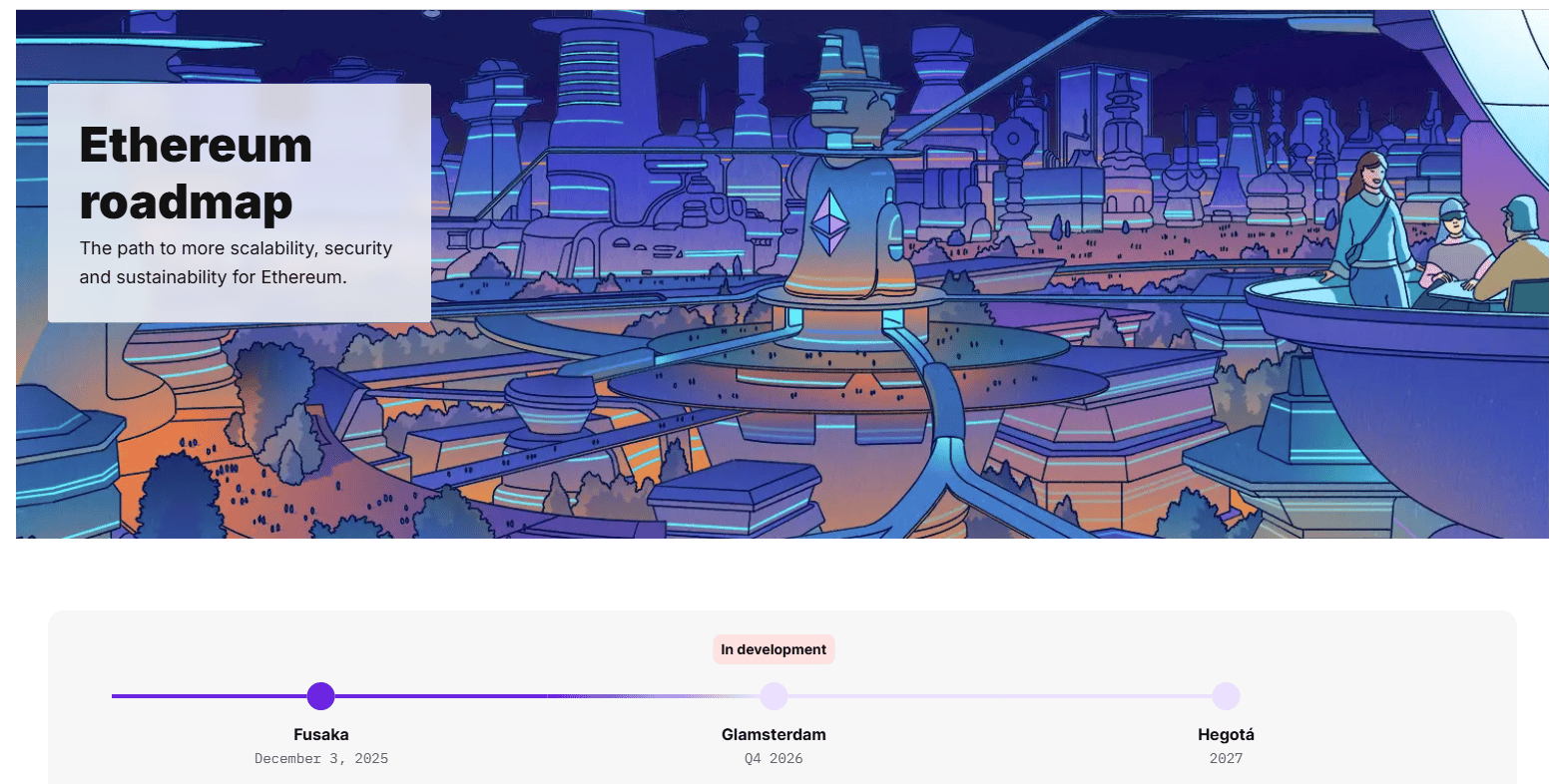
But for people who follow ETH’s development closely, it is a meaningful step forward. Glamsterdam is the next major protocol upgrade after Fusaka (back on December 3, 2025) and advances the network’s Layer 1 scaling roadmap.
What’s Glamsterdam, and why does it matter?
The Glamsterdam name combines two parts: “Amsterdam” for the execution-layer changes and “Gloas” for the consensus-layer changes, which aim to improve Ethereum’s base layer performance as activity grows, continuing the network’s efforts to scale efficiently.
According to the Ethereum.org post, this upgrade centers on three main goals: speeding up processing (parallelization), expanding capacity, and preventing database bloat (sustainability). In short, Glamsterdam will introduce structural changes to ensure that as the network increases capacity, it remains sustainable and operates efficiently.
Moreover, Glamsterdam is one of those upgrades that doesn’t change what users or traders see day to day, but strengthens the foundation underneath everything else.
The smooth activation on Sepolia is encouraging, with client teams, node operators, and developers now having a real live environment to test against. If Glamsterdam continues to run smoothly on Sepolia without hiccups, developers will determine the timing of the next activation on the Hoodi network before considering the mainnet launch. After Glamsterdam’s mainnet deployment, the Hegotá upgrade is expected to follow, but the date is not yet confirmed.
Ethereum’s Hegotá upgrade is still in early planning, with Fork-Choice enforced Inclusion Lists (FOCIL) and frame transactions as the two next changes so far; dozens more have been proposed, and none are settled as per the roadmap.
Upgrades like this rarely attract much attention, and they don’t bring a sudden price spike or flashy new feature for users and traders. Instead, they matter for maintaining the network’s long-term competitiveness and resilience.
For now, the successful Sepolia activation is a solid green light and shows tangible progress in the second-largest cryptocurrency’s long-term vision of a scalable, sustainable base layer.
Ethereum faces macroeconomic headwinds despite strong Q3
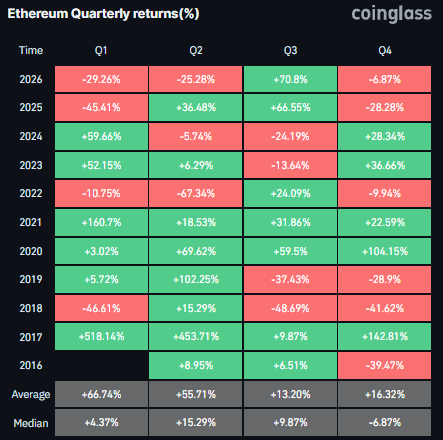
Ethereum price action remains weak so far this week, pulling back around $2,500 on Friday after three consecutive months of gains and its strongest Q3 performance since 2016.
While its improving network fundamentals support the long-term outlook, macroeconomic and geopolitical headwinds continue to weigh on its upside momentum.
A stronger US Dollar (USD) and elevated 10-year US Treasury yields are weighing on risk appetite, as higher yields make traditional fixed-income assets more attractive than risky assets such as cryptos.
Adding to this bearish outlook, the Federal Open Market Committee (FOMC) Minutes of the September 15–16 meeting showed that policymakers unanimously supported raising the federal funds rate target range by 25 basis points, to the 3.75%-4.0% range. Most officials expect that another interest rate increase would likely be appropriate by year-end to combat persistent inflation. This hawkish stance could further support US bond yields and the USD while capping cryptos.
Investors also remain worried about inflation risks stemming from volatile energy prices amid the US-Iran standoff over Tehran’s nuclear program, escalating Middle East conflicts, and disruptions around the Strait of Hormuz, further dampening risk appetite.
Looking ahead
If these macroeconomic developments continue to fuel higher Treasury yields and a stronger Greenback, they could keep pressure on ETH and limit its upside.
Therefore, while its long-term network evolution remains constructive, a sustained price recovery for the second-largest digital asset will likely require improved liquidity and favorable macroeconomic conditions.
Ethereum development FAQs
After the Dencun upgrade in March 2024, Ethereum users are looking towards the Pectra upgrade slated for early 2025. The upgrade will come in two phases, featuring improved wallet experience, an upgrade to the Ethereum virtual machine (EVM), PeerDAS for scaling L2s, improvement of blob capacity, etc.
Forks are upgrades or changes to the codebase/architecture of a blockchain network. Considering blockchain networks have no central governance, forks are only carried out after developers and validators reach a consensus. Hard forks are substantial permanent changes in a blockchain protocol that create two parallel chains – one with the old rules and the new with the implemented changes. Developers can either upgrade their software to build on the new chain or remain on the old chain as a separate network. During a hard fork, users receive an equivalent amount of their tokens on the new blockchain network 1:1. Soft forks, on the other hand, are subtle changes on a blockchain network that are backwards-compatible, meaning the network still operates as a single entity even when some developers don't implement the new changes.
Famously scribbled by Ethereum co-founder Vitalik Buterin in 22 minutes, Ethereum improvement proposal EIP-7702 is an advanced way of marrying EIP-3074 and ERC-4337 to unlock massive adoption for Ethereum's smart wallet functionality. Slated to go live in the upcoming Pectra upgrade, EIP-7702 will implement an advanced version of account abstraction enabling features like batching that allows users to pay a one-off transaction fee for multiple actions, sponsorship to enable an account pay gas fees for other users and wallet recovery options if users misplace their seed phrase.
Layer 2 is a collective term for protocols that aim to scale Ethereum by processing batches of transactions off the Mainnet. After performing a series of mathematical computations to ensure their validity, these L2s send a compressed version of the transactions back to the Mainnet for final processing. As a result, Layer 2 networks reduce transaction fees and enhance the Mainnet's speed while reaping its security. Think of them like several personal assistants that help their boss to process a series of paperworks. These assistants send a summarised version of the paperworks to the boss who confirms and signs on them.
Layer 3 solutions are application-specific blockchains built upon existing Layer 2 networks to offer high scalability and interoperability. For example, an L3 can focus on tackling privacy, increased scalability, gaming, or some complex functionality while still ultimately deriving security from the Layer 1.
Recommended Articles





Comments (0)
Click the $ button, enter the symbol, and select to link a stock, ETF, or other ticker.