


EIA projects US electricity demand breaking records in both 2026 and 2027



US electricity demand is heading for back-to-back records as AI data centers add to pressure from electrification across the economy.
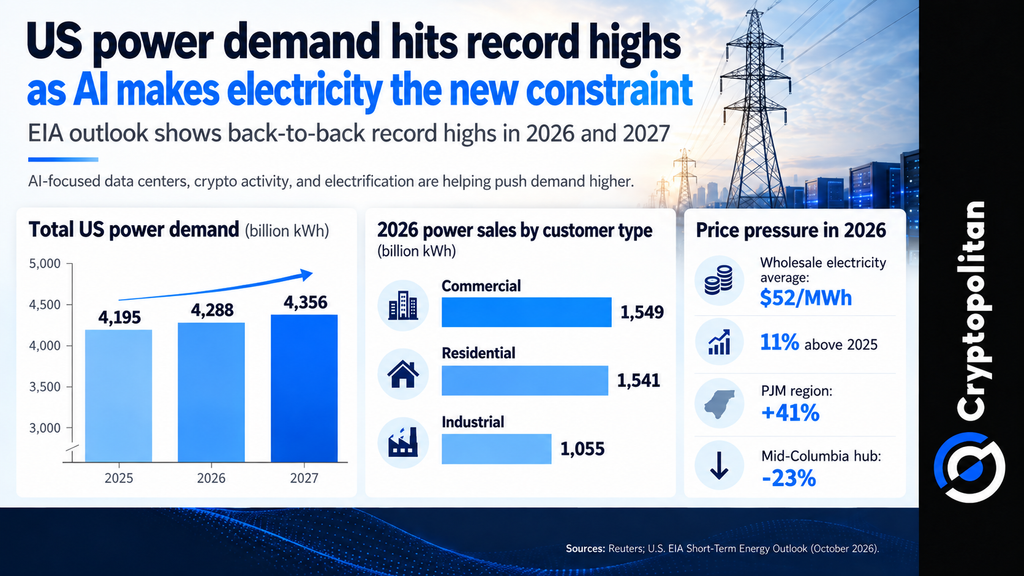
According to EIA projections, electricity demand in the US will increase from a record 4,195 billion kilowatt-hours in 2025 to 4,288 billion kWh in 2026 and 4,356 billion kWh in 2027. As has been put forward by Reuters, among the drivers of electricity demand expansion are AI data centers and cryptocurrency, as well as the growing use of electricity for heating and transportation purposes.
Commercial demand sets a record as prices climb
Commercial power sales, which include data centers, are projected to reach a historic high of 1,549 billion kWh in the current year, while residential sales should reach 1,541 billion kWh, and industrial use will reach 1,055 billion kWh.
Electricity is also increasing in cost. The EIA expects wholesale prices to average $52 per MWh in 2026, which would be 11% higher than in 2025, largely due to extreme weather conditions. PJM prices are expected to rise by 41%, while those in Mid-Columbia are expected to decrease by 23%.
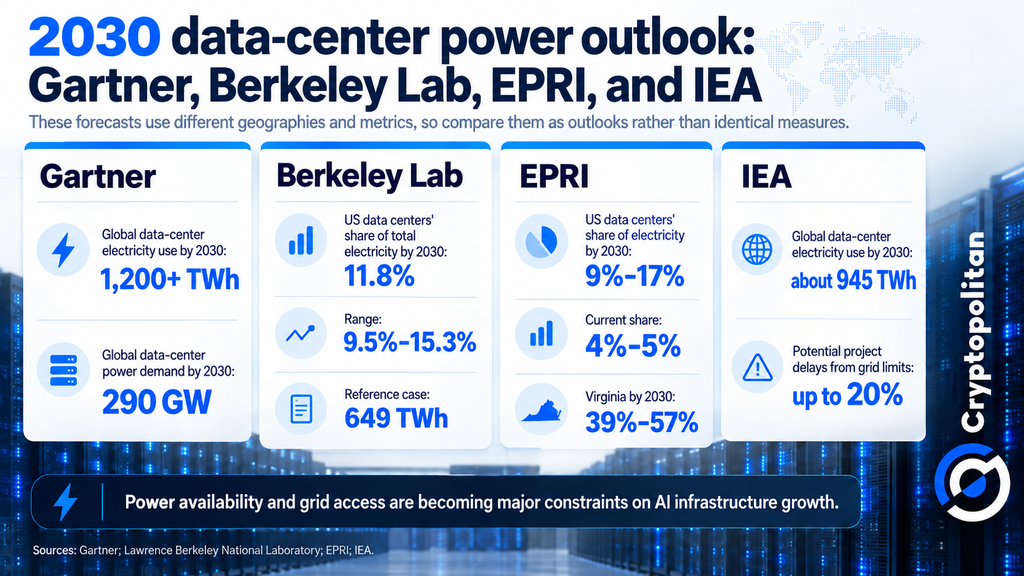
The pressure is being experienced all over the world. According to Gartner’s predictions, electricity consumption in data centers will increase by 26% from 447 TWh in 2025 to 565 TWh this year. In 2030, this number may exceed 1,200 TWh.
AI-optimized servers are expected to consume 31% of data-center electricity this year. Global data-center power demand is also projected to rise from 132 GW in 2026 to 290 GW by 2030.
Grid limits could decide where AI gets built
That makes access to electricity a competitive advantage.
According to Berkeley Lab’s estimates, by 2030, US data centers may use up to 11.8% of the country’s total electricity consumption (this estimate falls between the 9.5%-15.3% scenarios). Its reference case reaches 649 TWh.
The IEA mid-year report stated that electricity demand worldwide will rise by 3.6% in 2026 and by 3.8% in 2027, higher than the 3% recorded the previous year.
For the AI sector, chips ceased to be the sole hurdle. Factors such as grid connections, energy contracts, energy generation capacity, and permitting are now influencing the construction of new computing facilities.
Why Bitcoin miners sit in the middle of this
That shift is spilling into crypto infrastructure. As Cryptopolitan reported, Bitcoin miners already control energized sites and grid connections that AI developers need.
The US interconnection queue stands at around 2,600 GW. CoinShares also valued stabilized AI facilities in one recent transaction at roughly $27 million per megawatt, compared with below $3 million for miners’ energized but unleased capacity.
The economics are changing fast. In the AI infrastructure race, the scarce asset may not be computing power itself, but the electricity connection needed to switch it on.
The smartest crypto minds already read our newsletter. Want in? Join them.
Recommended Articles








Comments (0)
Click the $ button, enter the symbol, and select to link a stock, ETF, or other ticker.