


 Discount


Oracle Corp Stock (ORCL) Moved Down by 8.68% on Nov 25: What Signal Does It Send?


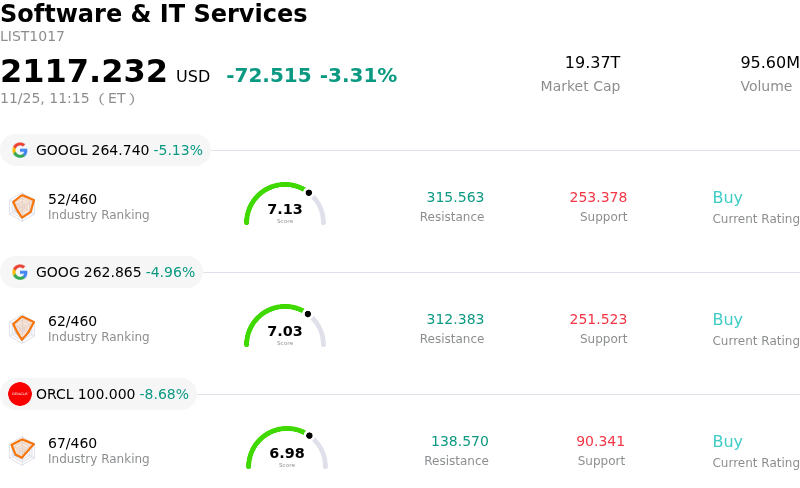
Oracle Corp (ORCL) moved down by 8.68%. The Software & IT Services sector is down by 3.31%. The company underperformed the industry. Top 3 stocks by turnover in the sector: Alphabet Inc Class A (GOOGL) down 5.13%; Alphabet Inc Class C (GOOG) down 4.96%; Oracle Corp (ORCL) down 8.68%.
What is driving Oracle Corp (ORCL)’s stock price down today?
Oracle Corporation experienced sharp downward pressure as heightened scrutiny surrounding its aggressive artificial intelligence infrastructure buildout, capital expenditure profile, and margin dynamics triggered an institutional reassessment of the stock. After enjoying a multi-quarter expansion in valuation multiples fueled by optimism over Oracle Cloud Infrastructure, the market is demonstrating diminished tolerance for any deceleration in revenue conversion or pressure on near-term free cash flow.
A primary catalyst behind the sell-off centers on escalating capital intensity. Oracle has committed substantial capital to procure advanced graphics processing units and expand data center capacity to support high-profile AI training and inference partnerships. While these initiatives have bolstered remaining performance obligations, institutional investors are growing increasingly concerned about the lag between aggressive capital outlays and sustained cash margin delivery. The significant depreciation burden, elevated operating expenses, and reliance on debt financing to fund compute infrastructure have heightened sensitivity toward return on invested capital.
At the same time, the broader competitive environment among cloud hyperscalers has intensified. Legacy public cloud leaders continue to aggressively defend enterprise workloads and price their custom silicon and AI development stacks competitively. While Oracle has successfully carved out a niche via multi-cloud database partnerships and dedicated OCI regions, signs of elongated enterprise deal cycles and cautious corporate IT spending have raised questions about whether mid-term cloud growth rates can maintain their previously forecasted trajectory. Softness in on-premises application updates and legacy database support streams further limits the operating leverage needed to offset heavy cloud investments.
Compounding these company-specific operational concerns, market sentiment has rotated toward risk aversion in high-multiple enterprise software names. Sell-side analysts have begun moderating near-term margin forecasts and trimming price targets to reflect higher financing costs and a more conservative view on IT budget growth. The confluence of lower free cash flow expectations, elevated leverage relative to tier-one cloud peers, and general profit-taking among institutional holders has driven heavy distribution.
Looking ahead, Oracle must demonstrate that its burgeoning cloud backlog can convert efficiently into high-margin, recurring software and platform revenue. Investors will remain heavily focused on management commentary regarding forward capital expenditure discipline, enterprise AI workload adoption rates, and progress toward deleveraging the balance sheet. Until clear evidence emerges that capital deployment has reached an inflection point relative to cash generation, the equity is likely to face valuation friction and elevated volatility.
Technical Analysis of Oracle Corp (ORCL)
Technically, Oracle Corp (ORCL) shows a MACD (12,26,9) value of -2.650, indicating a sell signal. The RSI at 35.804 suggests neutral condition and the Williams %R at 99.935 suggests oversold condition. Please monitor closely.
Media Coverage of Oracle Corp (ORCL)
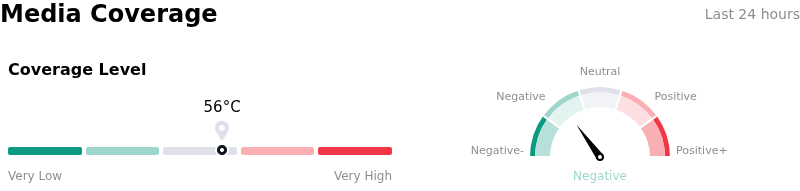
In terms of media coverage, Oracle Corp (ORCL) shows a coverage score of 56, indicating a moderate level of media attention. The overall market sentiment index is currently in bearish zone.
Fundamental Analysis of Oracle Corp (ORCL)
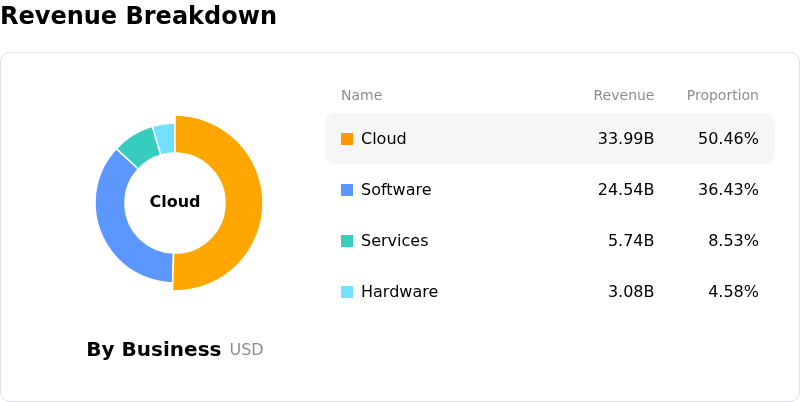
Oracle Corp (ORCL) is in the Software & IT Services industry. Its latest annual revenue is $67.36B, ranking 8 in the industry. The net profit is $16.98B, ranking 6 in the industry. Company Profile
Over the past month, multiple analysts have rated the company as Buy, with an average price target of $238.51, a high of $330.00, and a low of $110.00.
More details about Oracle Corp (ORCL)
Company Specific Risks:
- Surging Credit Risk and Escalating Debt Servicing Costs: Oracle's five-year credit default swap spread widened by 17 basis points to a record 356 basis points, reflecting acute bond market distress over the company's elevated debt burden, credit rating vulnerability near BBB-, and surging interest expenses stemming from recent senior note issuances with coupon rates as high as 8.65%.
- Aggressive AI Infrastructure CapEx and Cash Flow Depletion: Relentless capital spending on artificial intelligence data centers, projected to reach up to $95 billion in fiscal 2027, continues to severely drain liquidity, driving quarterly negative free cash flow of $5.4 billion and heightening reliance on dilutive equity financing and aggressive borrowing.
- Customer Concentration and Data Center Deployment Bottlenecks: Heavy revenue dependence on OpenAI and large enterprise AI commitments exposes Oracle to sharp execution downside, where ongoing electrical power procurement delays, GPU hardware constraints, and data center construction bottlenecks threaten the timely conversion of its contracted backlog into recognized revenue.
- Technical Breakdown Driven by Institutional De-Risking: The stock experienced heavy intraday selling pressure, plunging over 7.5% to break decisively below its 7-day, 20-day, and 50-day moving average support levels as institutional investors reduce exposure amid concerns over balance sheet leverage, dilution from recent multi-billion dollar share offerings, and decelerating legacy software support margins.
This article may include AI-generated content that is human-reviewed, which is for reference and general information purposes only and does not constitute investment advice.
Recommended Articles






Comments (0)
Click the $ button, enter the symbol, and select to link a stock, ETF, or other ticker.