


 Discount


Bristol-Myers Squibb Co Stock (BMY) Closed Up by 3.64% on Nov 24: Facts Behind the Movement


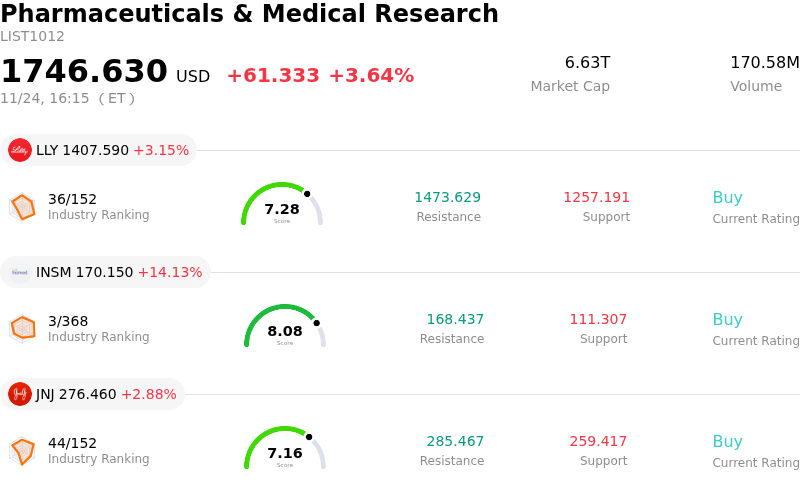
Bristol-Myers Squibb Co (BMY) closed up by 3.64%. The Pharmaceuticals & Medical Research sector is up by 3.64%. The company outperformed the industry. Top 3 stocks by turnover in the sector: Eli Lilly and Co (LLY) up 3.15%; Insmed Inc (INSM) up 14.13%; Johnson & Johnson (JNJ) up 2.88%.
What is driving Bristol-Myers Squibb Co (BMY)’s stock price up today?
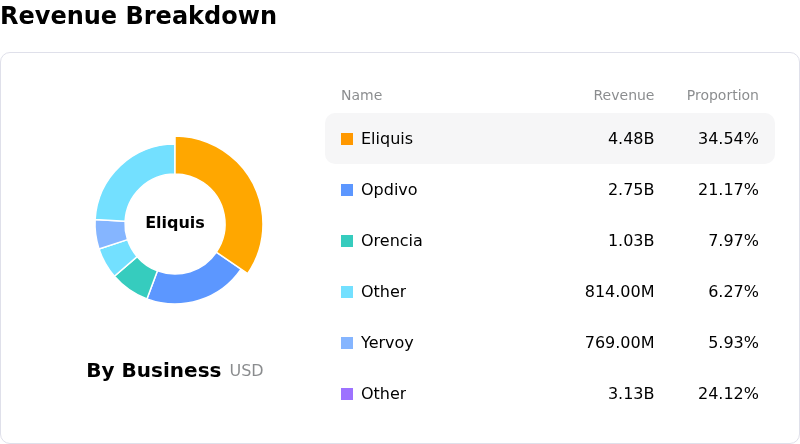
Bristol-Myers Squibb traded sharply higher as positive momentum surrounding its neuropsychiatry pipeline and commercial launch execution bolstered institutional confidence. A primary driver behind the upward movement is growing investor optimism around Cobenfy following encouraging preliminary clinical data and commercial expansion prospects. Early readouts from the Adept late-stage clinical program assessing the therapy for Alzheimer's disease psychosis have demonstrated meaningful reductions in hallucinations and delusions alongside manageable safety profiles. Because Alzheimer's-related psychosis represents a multi-billion-dollar market with limited approved options, expanding the drug beyond its initial schizophrenia indication is viewed by portfolio managers as a critical pillar to mitigate upcoming loss-of-exclusivity headwinds on legacy blockbusters like Eliquis and Opdivo.
The competitive landscape has further reinforced the company’s strategic positioning. With rival candidates encountering clinical delays and efficacy setbacks in development, Bristol-Myers Squibb has solidified its first-mover advantage in next-generation muscarinic receptor agonists. This reduced competitive threat has allowed analysts to raise long-term penetration estimates and upgrade peak sales projections for the franchise. The validation of the Karuna Therapeutics acquisition is increasingly recognized across Wall Street, driving positive revisions to multi-year revenue growth trajectories.
Broader sector dynamics and institutional portfolio flows also provided substantial tailwinds. Healthcare and large-cap pharmaceuticals experienced defensive rotation as investors sought shelter in high-cash-flow, dividend-paying assets amid broader macroeconomic and interest rate uncertainty. Bristol-Myers Squibb, trading at an attractive valuation multiple relative to historical medians and offering a robust shareholder yield, became a prime beneficiary of value-oriented fund reallocations.
While patent expiration risks for legacy franchises remain an ongoing structural challenge, the recent clinical de-risking and accelerating commercial adoption of key growth drivers have effectively improved sentiment, driving strong buying interest throughout the session.
Technical Analysis of Bristol-Myers Squibb Co (BMY)
Technically, Bristol-Myers Squibb Co (BMY) shows a MACD (12,26,9) value of -0.488, indicating a sell signal. The RSI at 52.493 suggests neutral condition and the Williams %R at 45.941 suggests neutral condition. Please monitor closely.
Fundamental Analysis of Bristol-Myers Squibb Co (BMY)
Bristol-Myers Squibb Co (BMY) is in the Pharmaceuticals & Medical Research industry. Its latest annual revenue is $48.19B, ranking 11 in the industry. The net profit is $7.05B, ranking 12 in the industry. Company Profile
Over the past month, multiple analysts have rated the company as Buy, with an average price target of $64.81, a high of $80.00, and a low of $40.00.
More details about Bristol-Myers Squibb Co (BMY)
Company Specific Risks:
- Executive Leadership Instability and R&D Reorganization: Bristol Myers Squibb disclosed the planned departure of Chief Financial Officer David Elkins following the abrupt shakeup of its R&D leadership and ouster of research head Robert Plenge. This sudden executive churn increases operational and execution risk at a critical juncture when the company must aggressively streamline clinical trial delivery and execute on $2 billion in cost-reduction targets.
- Severe Impending Blockbuster Patent Cliff: The company faces an acute loss of exclusivity overhang as top revenue drivers Eliquis and Opdivo, which account for roughly half of total corporate sales, approach patent expirations in 2028. Wall Street models project severe top-line erosion from $49 billion down to roughly $40.8 billion within that window, elevating contraction risk if the commercial ramp of newer products fails to accelerate.
- Pipeline Catalyst Skepticism and Clinical Failure Risks: Institutional analysts have raised significant caution and lowered price targets ahead of pivotal late-stage trial readouts. Critical late-stage pipeline candidates face substantial clinical and commercial hurdles, including safety and efficacy concerns for admilparant in fibrotic disease and questionable head-to-head superiority for novel blood thinner milvexian against incumbent therapies.
- Strategic Standalone Vulnerability as Megamerger Rumors Fade: Market sentiment has softened following the cooling of speculative megamerger talks with AstraZeneca, leaving Bristol Myers Squibb to confront its multi-year revenue cliff independently. The absence of an external strategic transaction leaves the company exposed to multiple compression and debt service strain from past acquisitions while relying heavily on unproven replacement therapies.
This article may include AI-generated content that is human-reviewed, which is for reference and general information purposes only and does not constitute investment advice.
Recommended Articles





Comments (0)
Click the $ button, enter the symbol, and select to link a stock, ETF, or other ticker.