


CrowdStrike Holdings Inc Stock (CRWD) Moved Down by 3.21% on Nov 17: What Signal Does It Send?


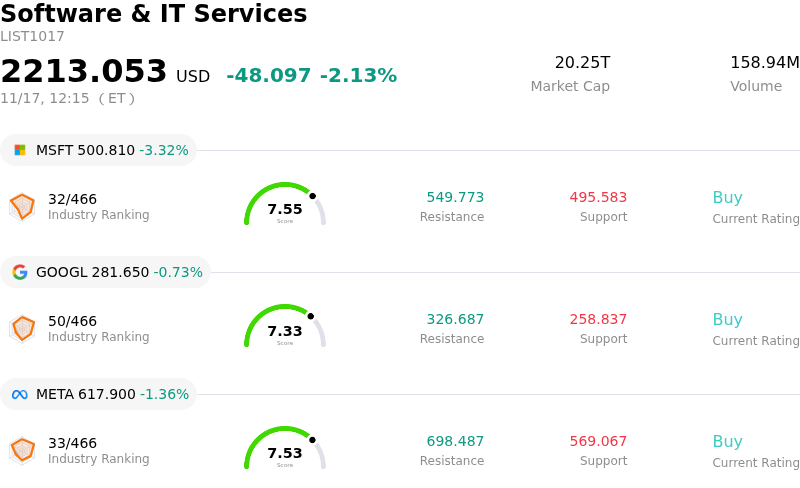
CrowdStrike Holdings Inc (CRWD) moved down by 3.21%. The Software & IT Services sector is down by 2.13%. The company underperformed the industry. Top 3 stocks by turnover in the sector: Microsoft Corp (MSFT) down 3.42%; Alphabet Inc Class A (GOOGL) down 0.79%; Meta Platforms Inc (META) down 1.36%.
What is driving CrowdStrike Holdings Inc (CRWD)’s stock price down today?
CrowdStrike experienced downward pressure during the trading session, reflecting broader risk-off sentiment across high-multiple enterprise software and cybersecurity peers. With macroeconomic crosscurrents and fluctuating bond yields weighing on premium-valuation growth assets, investors exhibited cautious positioning. High-beta cloud security vendors often face amplified sensitivity during such market-wide multiple contraction phases, particularly as market participants reassess capital allocation strategies across the broader technology complex.
Beyond top-down market dynamics, sector-specific scrutiny regarding enterprise IT budget trends contributed to the intraday weakness. Corporate security executives continue to navigate vendor consolidation mandates, prompting intense competitive friction between endpoint-centric architectures and expansive platform offerings from legacy enterprise providers and hyperscalers. Lingering questions over prolonged enterprise deal-signing cycles and aggressive pricing concessions by peers have spurred marginal caution among portfolio managers regarding near-term net new annual recurring revenue additions.
Tactical de-risking ahead of scheduled financial reporting periods also factored into the day's softer trading. Institutional investors frequently trim high-momentum holdings to mitigate downside vulnerability against elevated consensus expectations. Because valuation multiples for market-leading cybersecurity platforms price in near-flawless execution and resilient forward guidance, any market ambiguity surrounding billings momentum or operating margin expansion targets often prompts proactive exposure reduction.
Despite short-term volatility, CrowdStrike retains strong secular tailwinds driven by the ongoing migration toward unified cloud security, identity protection, and next-generation security operations. In the immediate horizon, however, heightened market sensitivity to valuation multiples, broader interest rate trajectories, and competitive platformization dynamics will likely remain the primary drivers dictating the stock's price discovery.
Technical Analysis of CrowdStrike Holdings Inc (CRWD)
Technically, CrowdStrike Holdings Inc (CRWD) shows a MACD (12,26,9) value of -4.613, indicating a sell signal. The RSI at 36.958 suggests neutral condition and the Williams %R at 95.504 suggests oversold condition. Please monitor closely.
Media Coverage of CrowdStrike Holdings Inc (CRWD)
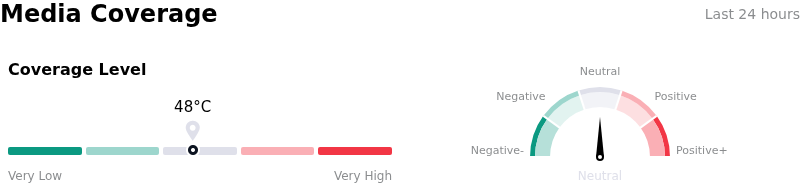
In terms of media coverage, CrowdStrike Holdings Inc (CRWD) shows a coverage score of 48, indicating a moderate level of media attention. The overall market sentiment index is currently in neutral zone.
Fundamental Analysis of CrowdStrike Holdings Inc (CRWD)
CrowdStrike Holdings Inc (CRWD) is in the Software & IT Services industry. Its latest annual revenue is $4.81B, ranking 67 in the industry. The net profit is $-162.50M, ranking 555 in the industry. Company Profile
Over the past month, multiple analysts have rated the company as Buy, with an average price target of $248.28, a high of $325.00, and a low of $119.00.
More details about CrowdStrike Holdings Inc (CRWD)
Company Specific Risks:
- Executive Insider Share Divestment: Recent SEC Form 4 filings reveal that President and CEO George Kurtz executed multi-million-dollar sales of Class A common stock, triggering selling pressure and dampening market sentiment ahead of upcoming fiscal results.
- Extreme Valuation Vulnerability: Trading at an elevated forward P/E ratio exceeding 180x alongside an aggressive sales multiple, the equity faces acute downside sensitivity to any shortfall in Net New Annual Recurring Revenue (ARR) or forward guidance.
- Margin Compression from Retention Concessions: Escalating operational overhead, high stock-based compensation, and customer incentive programs such as Falcon Flex continue to weigh heavily on profitability, keeping GAAP operating margins constrained.
- Prolonged Enterprise Litigation Overhang: Substantial outstanding damage claims, notably high-profile litigation from key enterprise customers such as Delta Air Lines, present recurring threats of legal liability, heightened defense expenses, and unexpected cash drains.
This article may include AI-generated content that is human-reviewed, which is for reference and general information purposes only and does not constitute investment advice.
Recommended Articles








Comments (0)
Click the $ button, enter the symbol, and select to link a stock, ETF, or other ticker.