


Oracle Corp Stock (ORCL) Moved Down by 3.48% on Nov 17: Drivers Behind the Movement


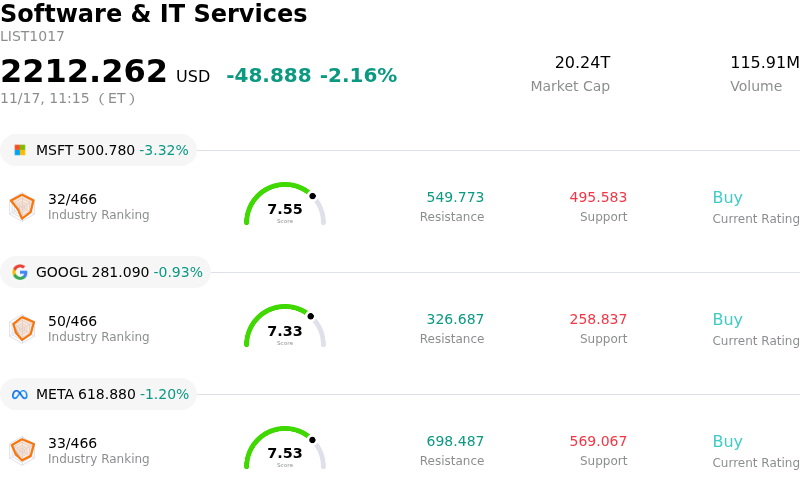
Oracle Corp (ORCL) moved down by 3.48%. The Software & IT Services sector is down by 2.16%. The company underperformed the industry. Top 3 stocks by turnover in the sector: Microsoft Corp (MSFT) down 3.31%; Alphabet Inc Class A (GOOGL) down 0.93%; Meta Platforms Inc (META) down 1.20%.
What is driving Oracle Corp (ORCL)’s stock price down today?
Oracle shares faced pronounced downward pressure today as broader market sentiment across enterprise software and cloud infrastructure softened, prompted by heightened investor scrutiny over capital expenditure intensity and near-term return on investment across the technology sector. As risk appetite moderated, institutional investors rotated away from high-multiple technology names that have experienced substantial prior appreciation, opting to de-risk portfolios amid shifting market dynamics.
A central driver of the negative sentiment stems from ongoing concerns regarding margin sustainability within Oracle Cloud Infrastructure. While Oracle continues to capture enterprise demand for high-performance computing and artificial intelligence workloads, the operational reality of aggressively scaling data center footprint, procuring specialized silicon, and securing large-scale power infrastructure has amplified near-term cost burdens. This front-loaded spending has renewed debate regarding free cash flow conversion and potential gross margin dilution, particularly as major hyperscale competitors intensify pricing pressure across core cloud database and enterprise application segments.
Additionally, industry indications point toward an elongation of enterprise software sales cycles and heightened budget scrutiny. With corporate IT departments exercising greater fiscal discipline, non-critical migration projects and software license renewals are facing extended approval procedures. This dynamic introduces operational friction for traditional database support revenues, which have historically supplied the predictable, high-margin cash flows required to finance capital-intensive cloud initiatives. The convergence of persistent infrastructure deployment expenses, competitive cross-currents, and tactical portfolio rebalancing by institutional managers collectively catalyzed the decline in Oracle's equity value.
Technical Analysis of Oracle Corp (ORCL)
Technically, Oracle Corp (ORCL) shows a MACD (12,26,9) value of -0.299, indicating a sell signal. The RSI at 39.973 suggests neutral condition and the Williams %R at 83.955 suggests oversold condition. Please monitor closely.
Media Coverage of Oracle Corp (ORCL)
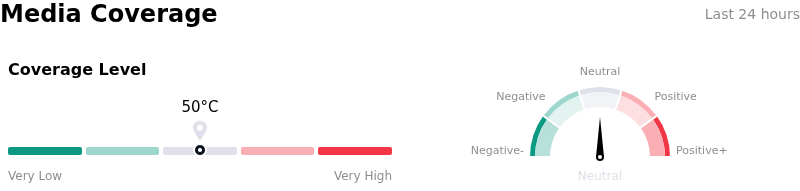
In terms of media coverage, Oracle Corp (ORCL) shows a coverage score of 50, indicating a moderate level of media attention. The overall market sentiment index is currently in neutral zone.
Fundamental Analysis of Oracle Corp (ORCL)
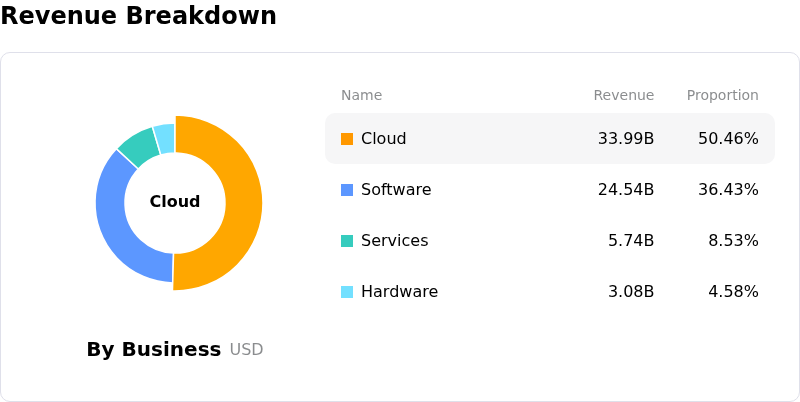
Oracle Corp (ORCL) is in the Software & IT Services industry. Its latest annual revenue is $67.36B, ranking 8 in the industry. The net profit is $16.98B, ranking 6 in the industry. Company Profile
Over the past month, multiple analysts have rated the company as Buy, with an average price target of $238.51, a high of $330.00, and a low of $110.00.
More details about Oracle Corp (ORCL)
Company Specific Risks:
- Surging AI Infrastructure CapEx and Free Cash Flow Depletion: Aggressive data center expansion has escalated capital expenditures toward a projected $90 billion to $95 billion buildout, driving multi-billion-dollar negative free cash flow and heightening balance sheet leverage as upfront facility and GPU procurement costs outpace immediate cash generation.
- Counterparty Concentration and Backlog Conversion Skepticism: A disproportionate share of Oracle’s multi-hundred-billion-dollar Remaining Performance Obligations (RPO) is concentrated with high-burn AI clients, notably OpenAI, creating heightened downside exposure to partner credit solvency, potential order cancellations, or contract renegotiations.
- Data Center Execution Bottlenecks and Power Constraints: Persistent grid interconnection shortages and infrastructure bottlenecks have triggered operational delays and force majeure disclosures on flagship data center initiatives, risking deferred workload onboarding and missed deployment milestones.
- Hyperscaler Alliance Friction and Contract Terminations: Emerging capacity rollbacks from key partners alongside geopolitical contract terminations are threatening multi-cloud deployment momentum, limiting enterprise workload migration and raising utilization risks across newly provisioned clusters.
This article may include AI-generated content that is human-reviewed, which is for reference and general information purposes only and does not constitute investment advice.
Recommended Articles








Comments (0)
Click the $ button, enter the symbol, and select to link a stock, ETF, or other ticker.