


Morgan Stanley Stock (MS) Moved Down by 3.30% on Nov 16: Key Drivers Unveiled


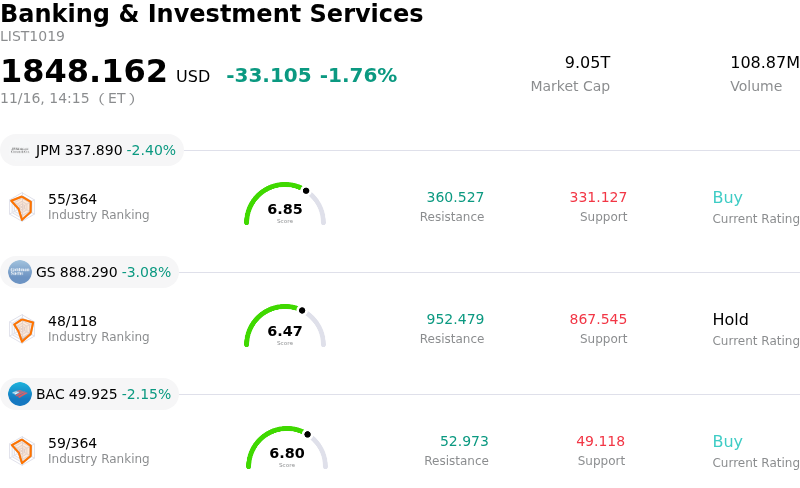
Morgan Stanley (MS) moved down by 3.30%. The Banking & Investment Services sector is down by 1.76%. The company underperformed the industry. Top 3 stocks by turnover in the sector: JPMorgan Chase & Co (JPM) down 2.40%; Goldman Sachs Group Inc (GS) down 3.08%; Bank of America Corp (BAC) down 2.15%.
What is driving Morgan Stanley (MS)’s stock price down today?
Morgan Stanley experienced pronounced downward pressure during the trading session, reflecting broader risk-off sentiment across the diversified financial sector alongside heightened sensitivity to macroeconomic and monetary policy expectations. As investors digested shifting signals surrounding the Federal Reserve's rate path and treasury yield curve movements, financial institutions with substantial asset and wealth management exposures faced renewed scrutiny over their net interest margin trajectory and client cash allocation dynamics.
A primary catalyst weighing on the firm is the persistent sensitivity within its flagship Wealth Management franchise. Institutional investors have been closely monitoring sweep deposit pricing, deposit sorting trends, and the sustainability of net interest income. In an environment characterized by yield curve fluctuations and persistent rate uncertainty, expectations for deposit costs remaining elevated have raised concerns regarding margin compression. Furthermore, softening equity market sentiment directly impacts asset-based fee generation, as fee-paying assets under management and advisory revenues correlate closely with broader market valuations.
Simultaneously, the Institutional Securities business faced headwind pressures from tempered short-term expectations for capital markets activity. While advisory pipelines and underwriting backlogs have shown structural recovery, periodic spikes in market volatility and macroeconomic ambiguity tend to delay the closing of complex mergers, debt syndications, and initial public offerings. Softness in equity underwriting and muted corporate risk appetite can temper institutional trading velocity, prompting portfolio managers to trim exposure to rate-sensitive financial intermediaries.
From a portfolio allocation standpoint, the intraday weakness was compounded by sector-wide rotation out of financials and into defensive asset classes. With regulatory capital requirements and operational risk guidelines remaining an ongoing area of compliance focus, institutional capital showed caution, choosing to de-risk holdings ahead of forthcoming economic data prints. Despite the near-term pullback, Morgan Stanley maintains robust capital reserves, strong liquidity metrics, and a balanced business model anchored by stable recurring wealth management revenues, though short-term market performance remains tied to macroeconomic stability and capital markets momentum.
Technical Analysis of Morgan Stanley (MS)
Technically, Morgan Stanley (MS) shows a MACD (12,26,9) value of 1.508, indicating a neutral signal. The RSI at 46.124 suggests neutral condition and the Williams %R at 73.447 suggests sell condition. Please monitor closely.
Media Coverage of Morgan Stanley (MS)
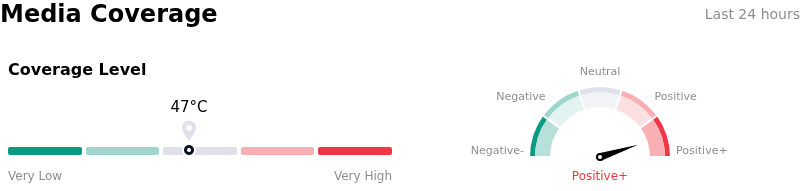
In terms of media coverage, Morgan Stanley (MS) shows a coverage score of 47, indicating a moderate level of media attention. The overall market sentiment index is currently in extremely bullish zone.
Fundamental Analysis of Morgan Stanley (MS)
Morgan Stanley (MS) is in the Banking & Investment Services industry. Its latest annual revenue is $114.74B, ranking 3 in the industry. The net profit is $16.25B, ranking 2 in the industry. Company Profile
Over the past month, multiple analysts have rated the company as Buy, with an average price target of $214.10, a high of $262.00, and a low of $190.00.
More details about Morgan Stanley (MS)
Company Specific Risks:
- Wealth Management Cash Sweep Margin Compression: Net interest income within the core Wealth Management franchise faces ongoing margin erosion as regulatory scrutiny from the SEC over cash sweep pricing pressures the firm to escalate client payout rates, raising deposit funding costs and degrading profitability.
- Multi-Agency Regulatory Probes into AML and Wealth Client Vetting: Scrutiny from the SEC, OCC, FinCEN, and FINRA regarding anti-money laundering (AML) controls and client due diligence—specifically regarding delayed activation of client risk-scoring tools across the E*Trade platform—poses ongoing risks of enforcement actions, compliance remediation expenses, and operational constraints.
- Capital Markets Pipeline Conversion and Underwriting Delays: Advisory and underwriting revenues within the Institutional Securities division face downside sensitivity as institutional analysts highlight M&A hesitancy and postponed debt and equity issuance pipelines driven by fixed-income volatility and uncertain rate trajectories.
- Elevated Valuation Vulnerability to Multiple Compression: Trading at a premium multiple relative to tangible book value compared to diversified banking peers, the stock is experiencing heightened intraday volatility as institutional portfolios de-risk and rebalance away from high-beta, capital-markets-sensitive financial institutions.
This article may include AI-generated content that is human-reviewed, which is for reference and general information purposes only and does not constitute investment advice.
Recommended Articles








Comments (0)
Click the $ button, enter the symbol, and select to link a stock, ETF, or other ticker.