


Palo Alto Networks Inc Stock (PANW) Moved Down by 3.12% on Nov 16: Facts Behind the Movement


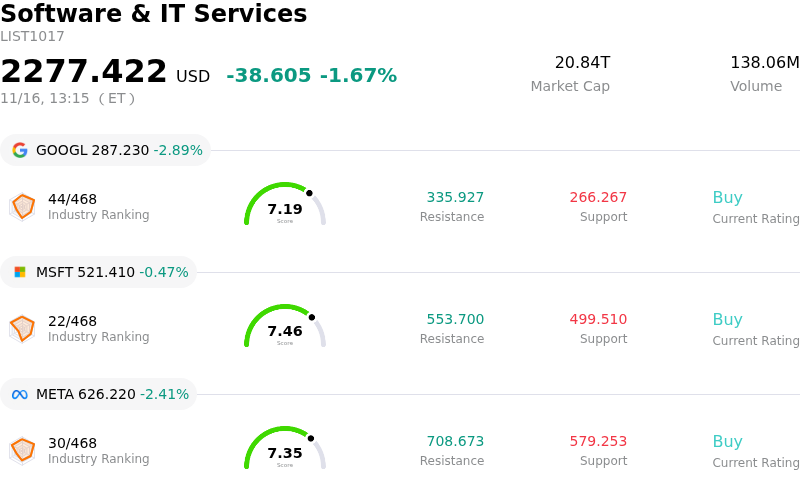
Palo Alto Networks Inc (PANW) moved down by 3.12%. The Software & IT Services sector is down by 1.67%. The company underperformed the industry. Top 3 stocks by turnover in the sector: Alphabet Inc Class A (GOOGL) down 2.89%; Microsoft Corp (MSFT) down 0.47%; Meta Platforms Inc (META) down 2.41%.
What is driving Palo Alto Networks Inc (PANW)’s stock price down today?
Palo Alto Networks experienced notable downward pressure as institutional market participants reduced risk exposure ahead of the company's fiscal first-quarter earnings release. Heading into the report, investors have maintained a cautious stance, driven by ongoing scrutiny regarding enterprise cybersecurity budget constraints and extended procurement cycles. Because the company trades at a premium valuation relative to the broader enterprise software sector, sensitivity to any potential deceleration in next-generation security annual recurring revenue or conservative management guidance has prompted tactical de-risking across growth-oriented portfolios.
At the industry level, debate continues to center on the execution timeline of the company's platformization initiative. While the strategy to consolidate disparate point products into an integrated architecture provides a robust long-term competitive moat, the interim transition involves short-term trade-offs, including deferred billing models, contract restructuring, and promotional discounting. Investors remain sensitive to whether these contract concessions will temporarily dilute free cash flow visibility or delay top-line realization, particularly as competitive pressures from cloud security and endpoint peers remain elevated.
Macroeconomic headwinds also contributed to the intraday weakness, as firm bond yields placed systematic valuation pressure on high-multiple technology equities. In an environment characterized by broader market rotation into defensive assets, high-beta software names faced broad-based liquidation. Palo Alto Networks' near-term price trajectory will ultimately depend on its upcoming financial results, with particular focus on remaining performance obligations, operating margin discipline, and management commentary regarding large-deal conversion velocity.
Technical Analysis of Palo Alto Networks Inc (PANW)
Technically, Palo Alto Networks Inc (PANW) shows a MACD (12,26,9) value of -7.119, indicating a sell signal. The RSI at 35.927 suggests neutral condition and the Williams %R at 99.464 suggests oversold condition. Please monitor closely.
Media Coverage of Palo Alto Networks Inc (PANW)
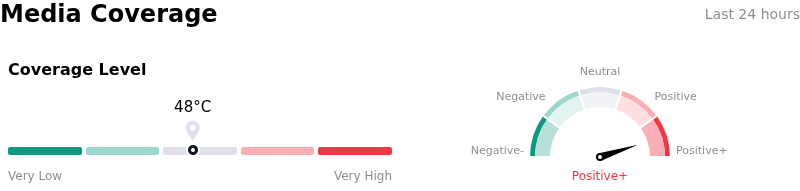
In terms of media coverage, Palo Alto Networks Inc (PANW) shows a coverage score of 48, indicating a moderate level of media attention. The overall market sentiment index is currently in extremely bullish zone.
Fundamental Analysis of Palo Alto Networks Inc (PANW)
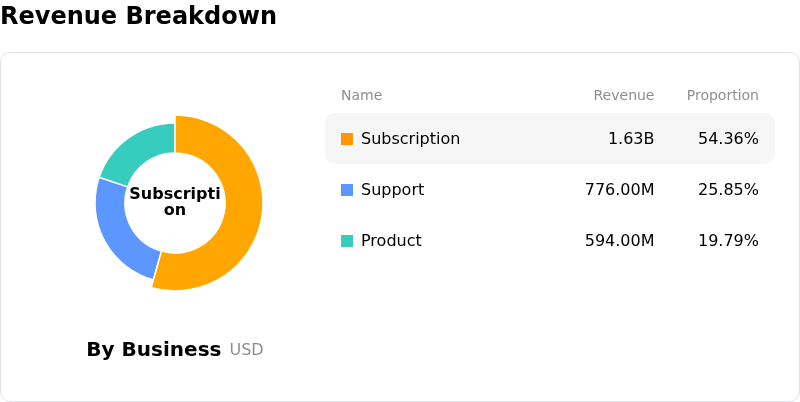
Palo Alto Networks Inc (PANW) is in the Software & IT Services industry. Its latest annual revenue is $11.48B, ranking 34 in the industry. The net profit is $307.00M, ranking 90 in the industry. Company Profile
Over the past month, multiple analysts have rated the company as Buy, with an average price target of $401.69, a high of $525.00, and a low of $190.00.
More details about Palo Alto Networks Inc (PANW)
Company Specific Risks:
- Extreme Valuation Compression Ahead of Earnings: Trading at an elevated forward price-to-earnings multiple near 77x, the stock faces heightened asymmetric downside risk into its November 18 fiscal Q1 report, with options markets pricing in an outsized ±11% volatility swing and institutional analysts warning that stretched valuation leaves zero tolerance for top-line or guidance missteps.
- Hardware Firewall Deceleration and Spillover Contagion: Recent peer read-throughs—specifically Fortinet's sharp product revenue deceleration—have triggered institutional caution that enterprise firewall appliance upgrade cycles are cooling, threatening Palo Alto Networks' core product revenue run-rate and short-term billings.
- Platformization Transition Friction on Near-Term Billings: Institutional research, including recent price target cuts from firms such as Jefferies, underscores mounting concern that management's aggressive platform-consolidation incentives and deferred contract monetization continue to depress near-term annual recurring revenue (ARR) and free cash flow margins before long-term cross-selling payoffs materialize.
- Persistent Pattern of Post-Earnings Selloffs: Heightened institutional de-risking and defensive positioning are compounded by market scrutiny highlighting that the stock has sold off after six of its last eight earnings reports—including a 9.3% drop after its prior print—amplifying intraday technical selling and bearish continuation patterns below key moving averages.
This article may include AI-generated content that is human-reviewed, which is for reference and general information purposes only and does not constitute investment advice.
Recommended Articles







Comments (0)
Click the $ button, enter the symbol, and select to link a stock, ETF, or other ticker.