


Home Depot Inc Stock (HD) Moved Up by 3.43% on Nov 9: What Signal Does It Send?


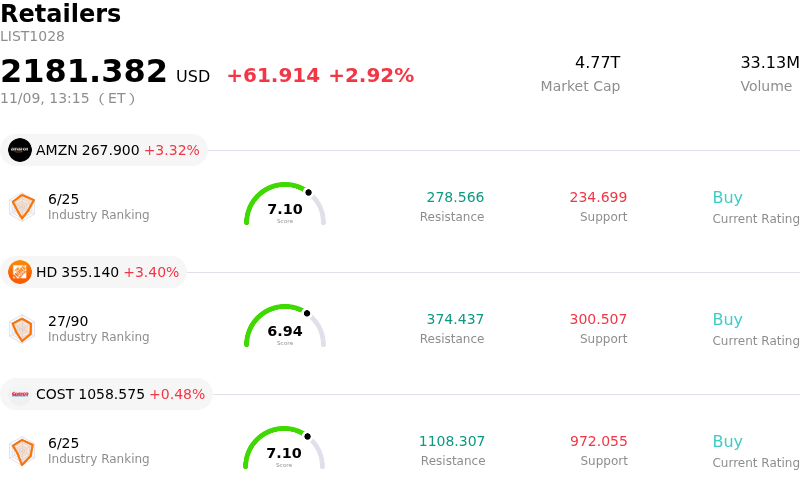
Home Depot Inc (HD) moved up by 3.43%. The Retailers sector is up by 2.92%. The company outperformed the industry. Top 3 stocks by turnover in the sector: Amazon.com Inc (AMZN) up 3.35%; Home Depot Inc (HD) up 3.40%; Costco Wholesale Corp (COST) up 0.48%.
What is driving Home Depot Inc (HD)’s stock price up today?
The Home Depot witnessed solid buying momentum during the session, propelled by a convergence of favorable macroeconomic shifts and improving sentiment across the broader housing and home improvement retail complex. As benchmark Treasury yields retreated, market expectations around sustained monetary easing provided a meaningful tailwind for interest-rate-sensitive equities. Lower long-term borrowing costs and the prospect of softening mortgage rates are widely viewed as critical catalysts to unlock pent-up existing home sales, a core driver of deferred maintenance and remodeling expenditures.
Beyond macroeconomic tailwinds, institutional flows reflected growing optimism surrounding the company's strategic positioning within the professional contractor channel. The integration of specialized wholesale distribution assets has expanded Home Depot's addressable market among complex project professionals, insulating top-line stability against softer do-it-yourself retail foot traffic. Sell-side sentiment has increasingly emphasized that contractor backlogs remain relatively healthy, and the company's supply chain investments and trade credit capabilities are effectively capturing market share from fragmented regional distributors.
Positioning ahead of upcoming quarterly financial updates also played a prominent role in the day's advance. Portfolio managers rotating into quality retail balance sheets sought out Home Depot for its disciplined capital allocation, robust free cash flow generation, and durable dividend profile. With valuation multiples previously compressed by lingering concerns over high mortgage rates and consumer caution toward large-ticket discretionary projects, the stock benefited from constructive short-covering and proactive institutional accumulation.
Looking ahead, the sustainability of this upward trajectory will hinge on consumer willingness to re-engage with higher-ticket discretionary categories and the velocity of housing market stabilization. While macro easing offers clear relief, investors will closely scrutinize upcoming quarterly performance for indicators of comparable store sales inflection, gross margin resilience in an inflationary backdrop, and progress in expanding market share across both residential and commercial trade ecosystems.
Technical Analysis of Home Depot Inc (HD)
Technically, Home Depot Inc (HD) shows a MACD (12,26,9) value of 6.856, indicating a buy signal. The RSI at 68.886 suggests neutral condition and the Williams %R at 14.095 suggests overbought condition. Please monitor closely.
Fundamental Analysis of Home Depot Inc (HD)
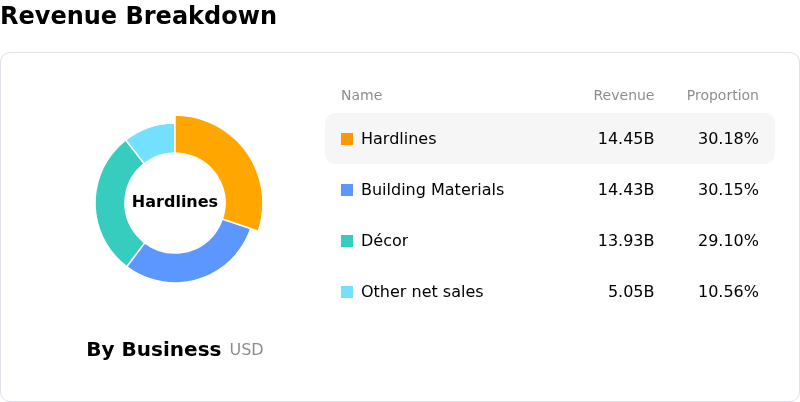
Home Depot Inc (HD) is in the Retailers industry. Its latest annual revenue is $164.68B, ranking 1 in the industry. The net profit is $14.16B, ranking 1 in the industry. Company Profile
Over the past month, multiple analysts have rated the company as Buy, with an average price target of $372.86, a high of $425.00, and a low of $255.00.
More details about Home Depot Inc (HD)
Company Specific Risks:
- Persistent Housing Turnover Stagnation: Elevated mortgage rates and the mortgage "lock-in" effect continue to severely depress residential turnover, dampening the primary catalyst for new home improvement expenditures and delaying retail sales recovery into late 2027.
- Deficit in Big-Ticket Discretionary Remodeling: Heightened financing costs and sticky inflation are prompting homeowners to defer high-margin, large-scale discretionary renovation projects, exposing Home Depot to core comp-sales weakness ahead of its November quarterly earnings.
- Operating Margin Compression and ROIC Dilution: The company's operating margin has compressed toward a multi-year low of approximately 12.4%, while aggressive debt-funded professional-distribution acquisitions have diluted return on invested capital (ROIC) and increased near-term capital integration risks.
- Elevated Valuation Multiple Vulnerability: Trading at an elevated forward price-to-earnings ratio above 22x, the stock faces institutional skepticism—underscored by recent price target reductions and cautious Hold ratings from firms such as Stifel and Bernstein—leaving intraday pricing exposed to sharp multiple contraction if guidance misses expectations.
This article may include AI-generated content that is human-reviewed, which is for reference and general information purposes only and does not constitute investment advice.
Recommended Articles








Comments (0)
Click the $ button, enter the symbol, and select to link a stock, ETF, or other ticker.