


RTX Corp Stock (RTX) Moved Down by 3.07% on Nov 4: Drivers Behind the Movement


RTX Corp (RTX) moved down by 3.07%. The Industrial Goods sector is down by 2.24%. The company underperformed the industry. Top 3 stocks by turnover in the sector: Bloom Energy Corp (BE) down 8.26%; Caterpillar Inc (CAT) down 5.82%; Vertiv Holdings Co (VRT) down 14.00%.
What is driving RTX Corp (RTX)’s stock price down today?
RTX Corporation experienced notable downward volatility during today's trading session, largely driven by broad political shifts that weighed heavily across the entire U.S. aerospace and defense sector. Following election developments that altered legislative power dynamics in Congress, market participants rapidly reassessed expectations for future defense spending and long-term federal budget allocations. Heightened scrutiny around proposed military budget expansions prompted institutional investors to recalibrate exposure, leading to a coordinated pull-back across major defense contractors.
Beyond the political headlines, the stock's retracement reflects short-term profit-taking and valuation consolidation following a period of strong performance. RTX recently reported solid fundamental performance in its third-quarter financial results, delivering double-digit organic sales growth across its core operating segments, strong free cash flow generation, and an upward revision to its full-year financial guidance. However, with shares trading near recent highs prior to the session, short-term market participants utilized political policy uncertainties as a catalyst to lock in profits.
Despite the immediate sector-wide headwind, RTX maintains robust underlying operational fundamentals. The company continues to benefit from a record order backlog, sustained long-term demand across both military defense programs and commercial aerospace aftermarkets, and expanding operating margins in its propulsion and systems divisions. While political shifts may generate temporary market sentiment volatility regarding government procurement timelines, institutional investors continue to evaluate long-term contract execution, commercial aviation recovery trends, and structural cash flow conversion capacity.
Technical Analysis of RTX Corp (RTX)
Technically, RTX Corp (RTX) shows a MACD (12,26,9) value of 2.645, indicating a buy signal. The RSI at 54.135 suggests neutral condition and the Williams %R at 45.963 suggests neutral condition. Please monitor closely.
Media Coverage of RTX Corp (RTX)
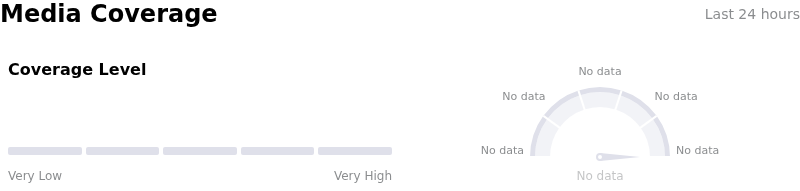
In terms of media coverage, RTX Corp (RTX) shows a coverage score of 50, indicating a moderate level of media attention. The overall market sentiment index is currently in bullish zone.
Fundamental Analysis of RTX Corp (RTX)
RTX Corp (RTX) is in the Industrial Goods industry. Its latest annual revenue is $88.60B, ranking 2 in the industry. The net profit is $6.73B, ranking 2 in the industry. Company Profile
Over the past month, multiple analysts have rated the company as Buy, with an average price target of $225.67, a high of $252.00, and a low of $164.00.
More details about RTX Corp (RTX)
Company Specific Risks:
- Non-Recurring Tariff Recovery Flattering Core Earnings: Recent quarterly financial results and guidance revisions were heavily supported by a $0.25 per share non-recurring International Emergency Economic Powers Act (IEEPA) tariff cost recovery benefit, masking core organic profitability and raising institutional concerns regarding underlying earnings sustainability once one-off credits roll off.
- Supply Chain Bottlenecks and Delivery Delays: Rapidly expanding defense backlog and record multiyear contract awards face persistent supply chain constraints, component shortages, and weapons delivery delays, creating execution risks and cost overrun exposure across undefinitized production contracts.
- Pratt & Whitney GTF Engine Fleet Durability Expenses: Ongoing technical and durability challenges within the Pratt & Whitney Geared Turbofan (GTF) engine family require accelerated shop visit schedules and maintenance overhauls, incurring elevated warranty costs and operating margin headwinds.
- Near-Term Margin Compression from OE Mix Shift: Management commentary points to Q4 margin compression due to an unfavorable mix shift toward lower-margin Original Equipment (OE) deliveries relative to high-margin aftermarket sales, alongside increased research, development, and digital infrastructure spending.
This article may include AI-generated content that is human-reviewed, which is for reference and general information purposes only and does not constitute investment advice.
Recommended Articles







Comments (0)
Click the $ button, enter the symbol, and select to link a stock, ETF, or other ticker.