


Strategy (MSTR) bitcoin buying model faces scrutiny as STRC costs climb



- Strategy’s STRC model helped fund its Bitcoin purchase in H1, but annual dividends rose to $725 million, raising questions about its cost efficiency.
- K33 analysts stated that the US government's transfer of 17,700 Bitcoin to Coinbase Prime does not indicate potential selling activity.
- Bitcoin’s 30-day correlation with the Nasdaq rose to 0.6, its highest since June, although BTC's daily spot trading volume fell 10%.
Strategy’s (MSTR) STRC financing strategy increased its Bitcoin (BTC) holdings in H1, but made its capital structure more expensive, prompting an examination of its effectiveness, according to a Tuesday report by K33.
Strategy’s Bitcoin accumulation model faces scrutiny amid recovery
STRC recovered close to its $100 par value, closing at $99.90 after an extended period of heavy buybacks. The instrument helped Strategy (formerly MicroStrategy) acquire nearly 100,000 BTC in H1, but also increased its dividend obligations and capital costs.
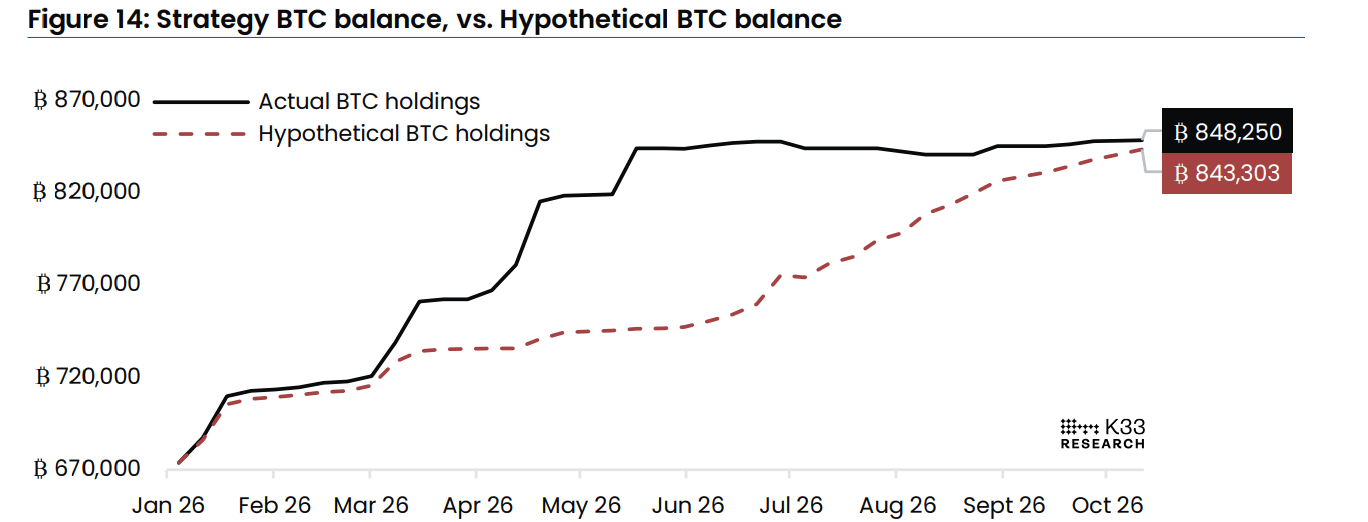
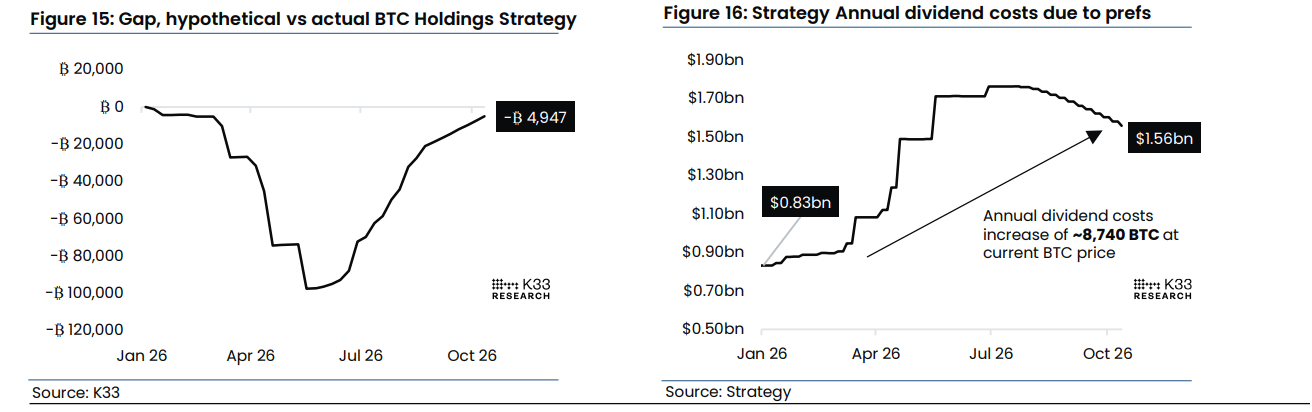
K33 tested a hypothetical scenario in which Strategy did not use STRC to finance Bitcoin purchases during the first half of the year. Under this scenario, Strategy would have held 843,303 BTC as of Monday, compared with its actual holdings of 848,250 BTC. The company therefore accumulated 4,947 more BTC using its existing financing strategy.
“Was the pref model a mistake? We believe the answer to that question is yes,” K33 wrote.
Apart from aiding Bitcoin purchases, STRC has added $725 million in annual dividend expenses. At BTC's price of roughly $83,000, that obligation represents about 8,740 BTC annually.
“STRC and the other prefs added noise to what used to be a simple capital structure,” the report stated.
The firm added that the company’s USD reserve reduces the risk of forced Bitcoin sales but generates an assumed 4% return while supporting preferred stock carrying a 12% coupon.
The report pointed to Strategy's plain at-the-money (ATM) issuance model as the most effective way to purchase Bitcoin.
US government Bitcoin transfers do not signal potential sell-offs
K33 also examined recent movements of government-held Bitcoin that raised concerns about potential selling pressure.
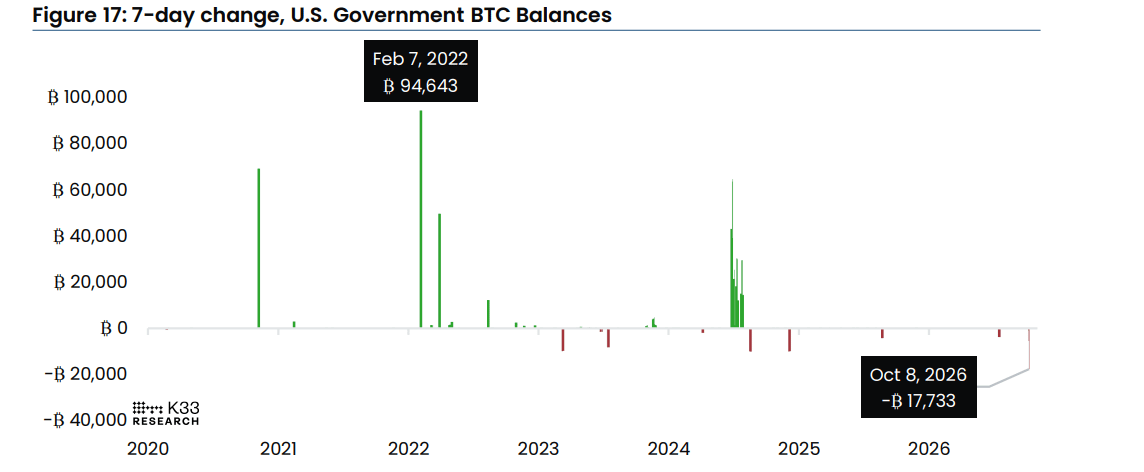
The US government transferred about 17,700 BTC to Coinbase Prime during the week, along with another 3,800 BTC from unidentified wallets that Galaxy Research attributed to the government. The estimated reduction in government Bitcoin holdings was the largest weekly decline since the final Silk Road auction in November 2015.
However, K33 cautioned against interpreting the transfers as evidence of an impending sale. Coinbase Prime serves as both a trading partner and an official custodian for the US Marshals Service. Also, the deposit address used in the transfers had received Bitcoin associated with several unrelated cases.
“A transfer from a government wallet to Coinbase Prime does not mean a sale,” the report stated.
Approximately 16,500 BTC from the transfers are associated with the 2016 Bitfinex hack and are expected to be returned to the exchange in kind after the legal claims process concludes.
Bitfinex has pledged to use 80% of recovered funds to buy back and burn its LEO tokens within 18 months.
Despite speculation surrounding BTC sales, the 30-day correlation between Bitcoin and the Nasdaq rose to 0.6, its highest level since June, after roughly three months of weak correlation. The rise in correlation comes amid weak spot volumes for the top crypto. Average daily Bitcoin spot trading volume fell 10% week-over-week to $2.5 billion, indicating subdued market activity.
Bitcoin is trading at $83,365, up 0.5% in the past 24 hours at the time of writing.
Recommended Articles









Comments (0)
Click the $ button, enter the symbol, and select to link a stock, ETF, or other ticker.