


Crypto Today: Bitcoin, Ethereum, XRP defend key support as ETF inflows return



- Bitcoin slips below the 50-day EMA and holds above $64,000 support amid $189 million ETF inflows.
- Ethereum tests the range limit resistance at the 100-day EMA, backed by institutional capital inflows.
- XRP reclaims the pivotal $1.00 support level as the RSI gains momentum toward the midline.
Bitcoin’s (BTC) upside remains capped on Wednesday while the downside appears strongly supported above $64,000. The Crypto King’s early week rebound lost momentum near $65,000 as investors assessed the impact of geopolitical tensions in the Middle East.
Altcoins, including Ethereum (ETH) and Ripple (XRP), are broadly consolidating with ETH trading above $1,900 and XRP above $1.00. Rebounds are increasingly difficult to sustain, despite the tokens holding key support levels and sentiment improving.
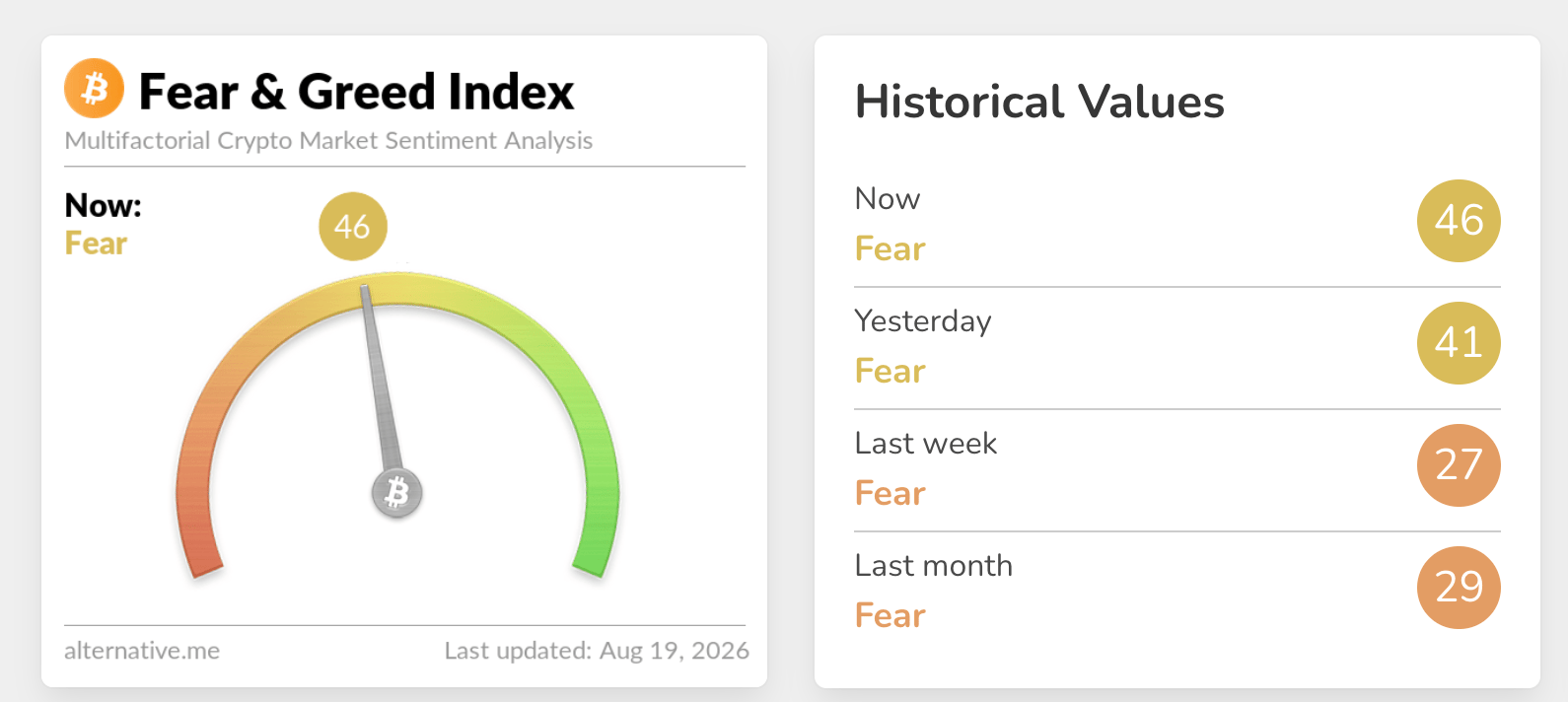
Crypto market sentiment is currently embedded in the Fear territory of the Fear & Greed Index on Wednesday, up slightly from 41 the day before and 27 in the previous week. If this growth continues, risk-on sentiment could boost investor engagement and demand, raising the odds of an extended recovery.
Bitcoin, Ethereum and XRP attract capital inflows
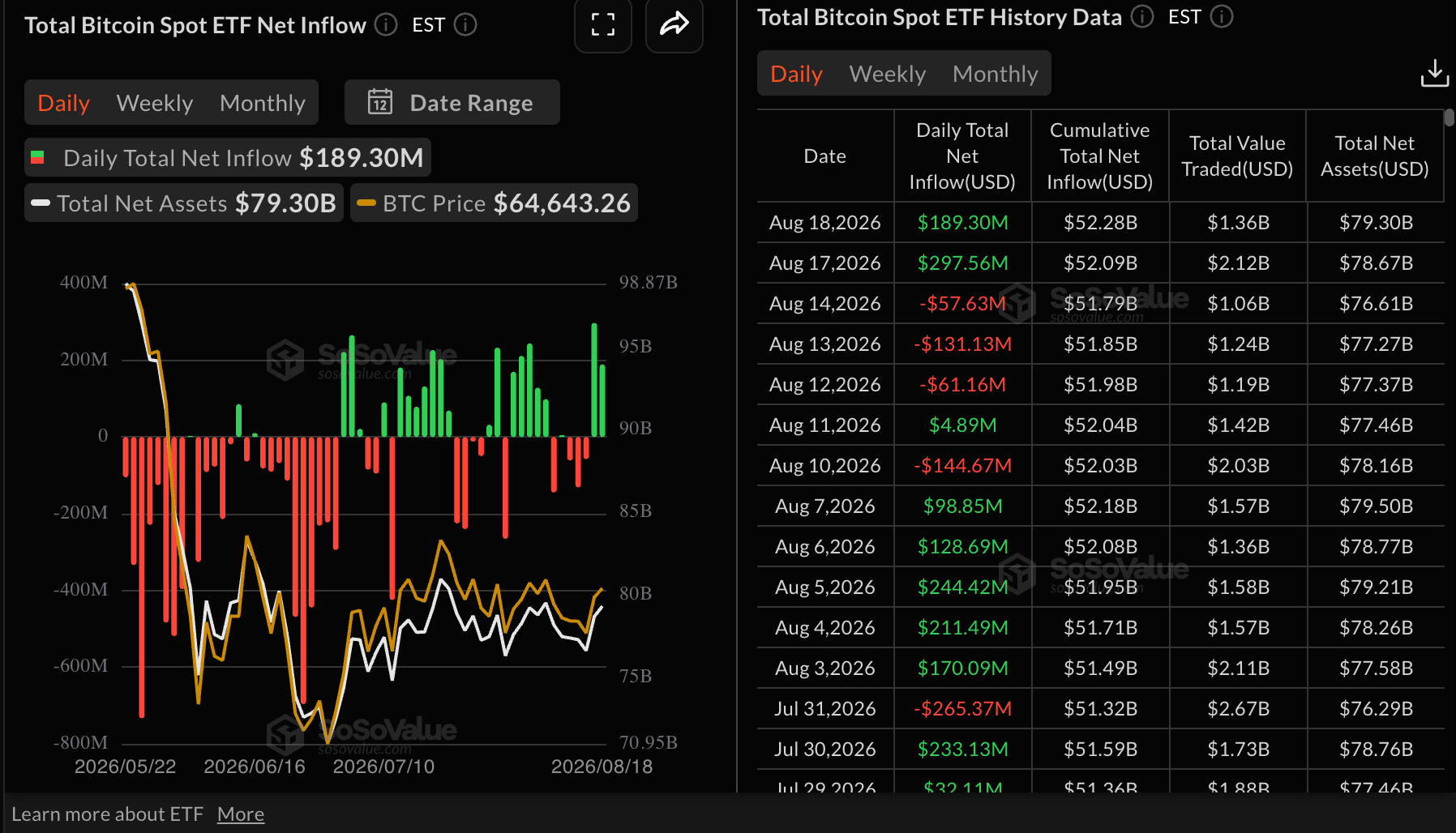
Bitcoin spot Exchange-Traded Funds (ETFs) extended a recently renewed bullish streak, with inflows totaling $189 million on Tuesday. This followed $298 million recorded on Monday, showing a reduced impact from rising US-Iran tensions.
The Memorandum of Understanding (MoU) both countries signed in June expired on Monday. Meanwhile, US President Donald Trump said on Tuesday that there are talks underway or scheduled with Iran.
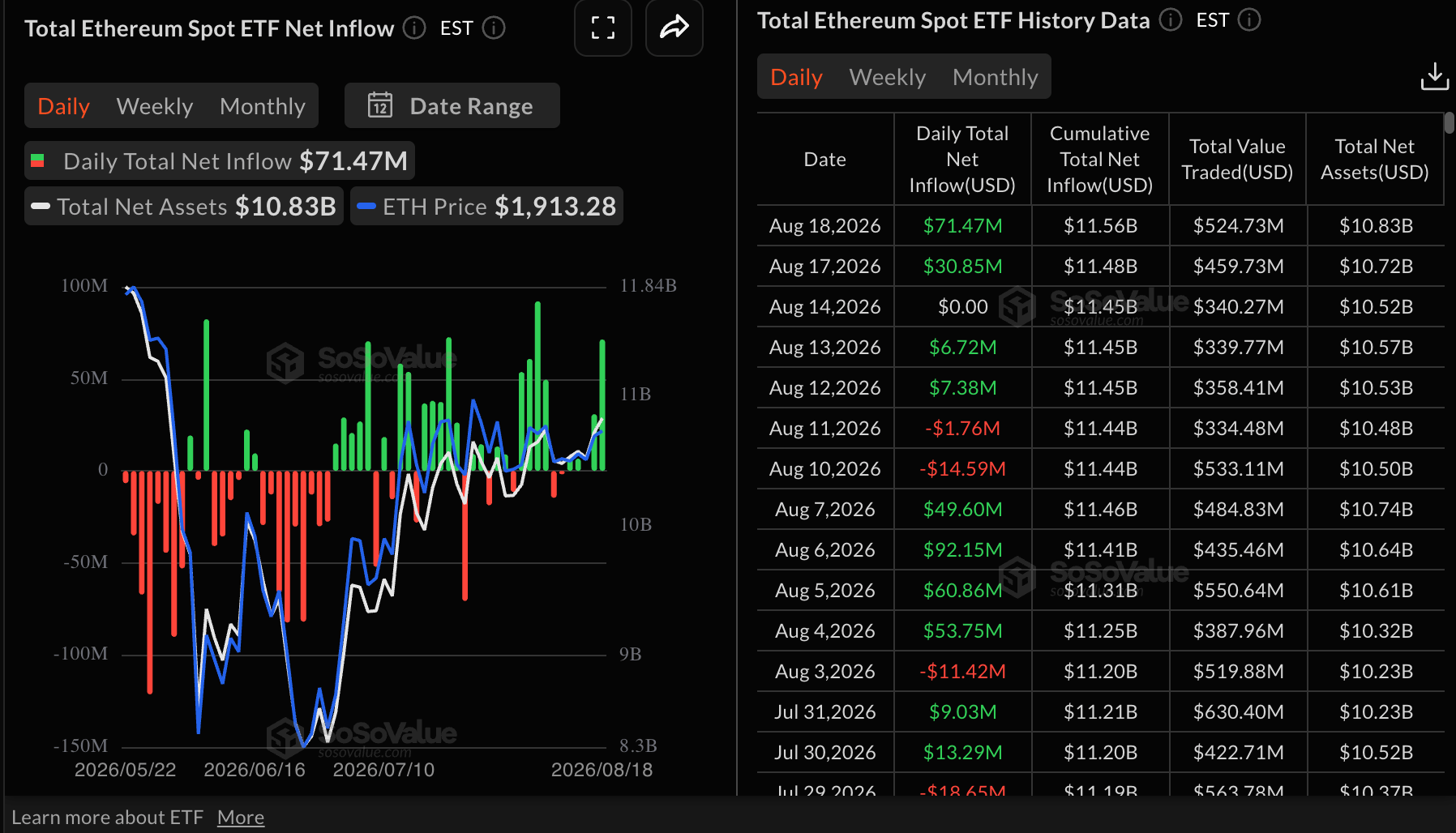
Ethereum spot ETFs marked their second consecutive day of inflows on Tuesday with institutional investors depositing roughly $71 million, more than double Monday’s $31 million. Cumulative inflows ticked up slightly to $11.56 billion, from $11.48 billion over the same period.
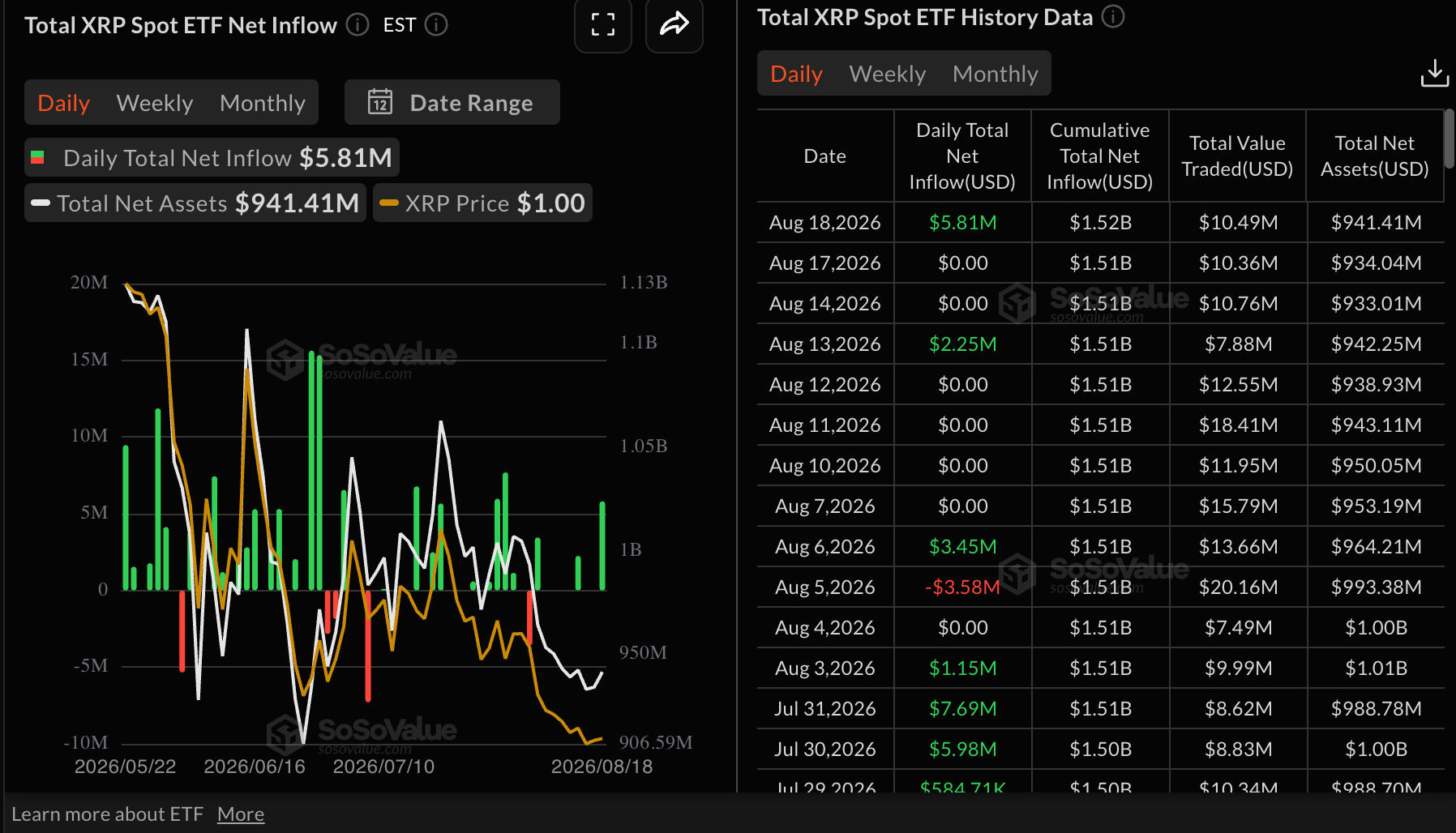
As for XRP, spot ETF inflows returned on Tuesday, amounting to nearly $6 million after two days of muted activity. According to SoSoValue, cumulative inflows average $1.52 billion, with net assets under management at $941 million.
Technical analysis: Bitcoin lacks upside momentum
Bitcoin trades above $64,000, but remains beneath a stack of key Exponential Moving Averages (EMAs), keeping the near-term tone capped and mildly bearish. The pair sits just under the 50-day EMA, while the 100-day and 200-day EMAs reinforce the overhead supply zone.
The spot price remains above the Bollinger middle band, now support at $63,889, with the Relative Strength Index (RSI) hovering around 52 on the daily chart and a slightly positive Moving Average Convergence Divergence (MACD) reading, which together hint at tentative buying interest but not enough to shift the broader topside constraints.
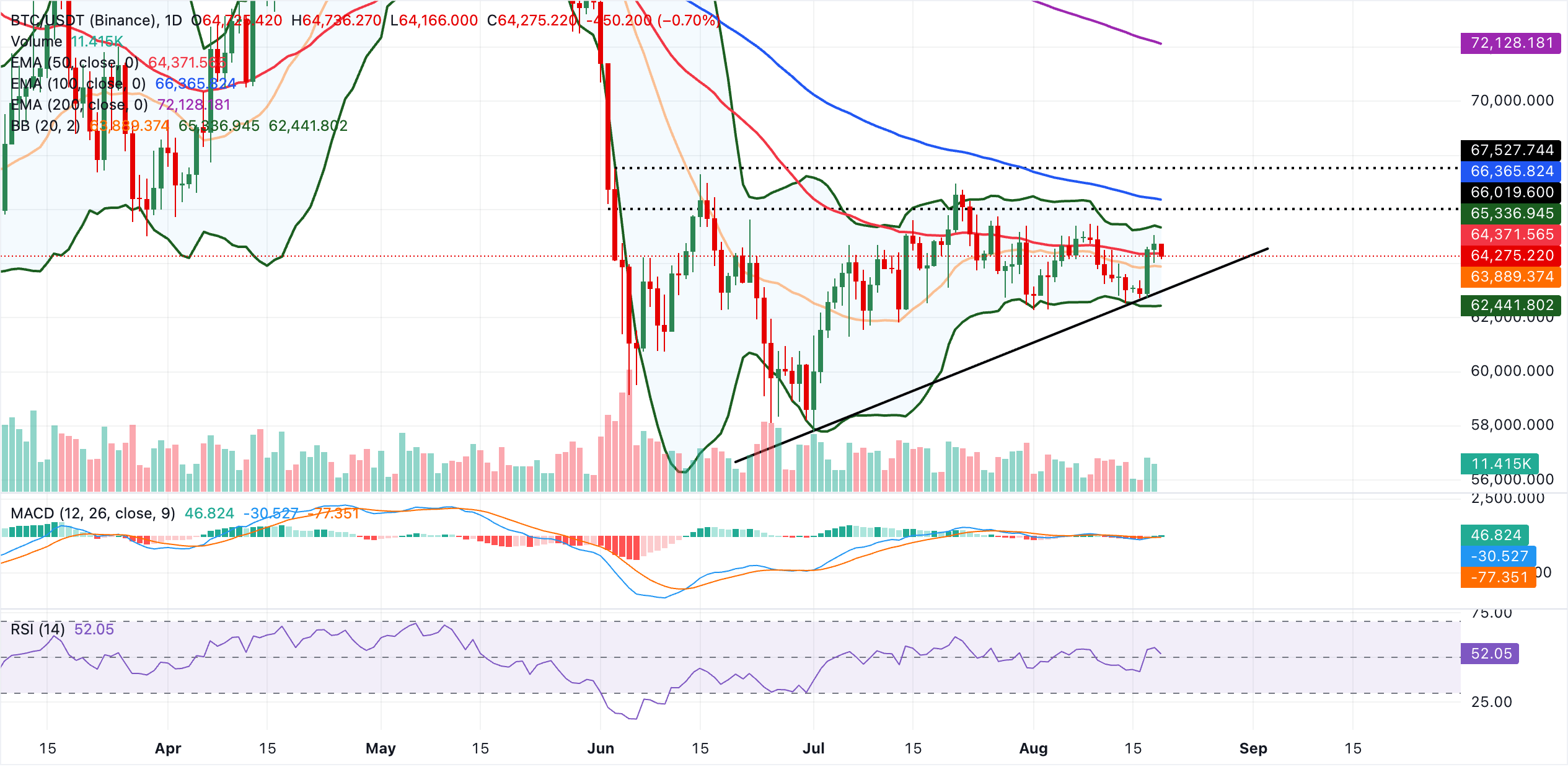
Immediate resistance is defined by the 50-day EMA at $64,372. A decisive daily close above this level could open the way toward the upper Bollinger band near $65,337 and then the 100-day EMA at $66,366, with the 200-day EMA at $72,128 acting as a more distant bullish objective. On the downside, initial support lies at the 20-day Bollinger middle band at $63,889, ahead of stronger Bollinger support near $62,442. A deeper retreat would expose the rising trend-line support around $56,666, where medium-term dip-buying interest would be expected to re-emerge.
"Current holders remain reluctant to sell, while external investors remain reluctant to buy, leaving BTC virtually petrified over the summer. At the same time, leverage is gradually expanding, echoing the classic pattern where prolonged stability eventually breeds instability. The range may persist for a few more weeks, but the longer it does, the larger the eventual move is poised to be," K33 Research analysts said in a weekly report.
Altcoins technical outlook: Ethereum and XRP hold key support
Ethereum trades above $1,900, with the pair capped below the 100-day EMA at $1,920 and the 200-day EMA at $2,109, maintaining a mildly bearish near-term bias despite holding above shorter-term supports. The 50-day EMA at $1,872 and the rising trendline support derived from prior lows around $1,885 both sit beneath the market, hinting at an underlying bid, while the RSI above 57 stays in neutral-positive territory. Meanwhile, the MACD indicator hovers just below the zero line with a flattening negative reading, suggesting waning downside momentum rather than a clean bullish shift.
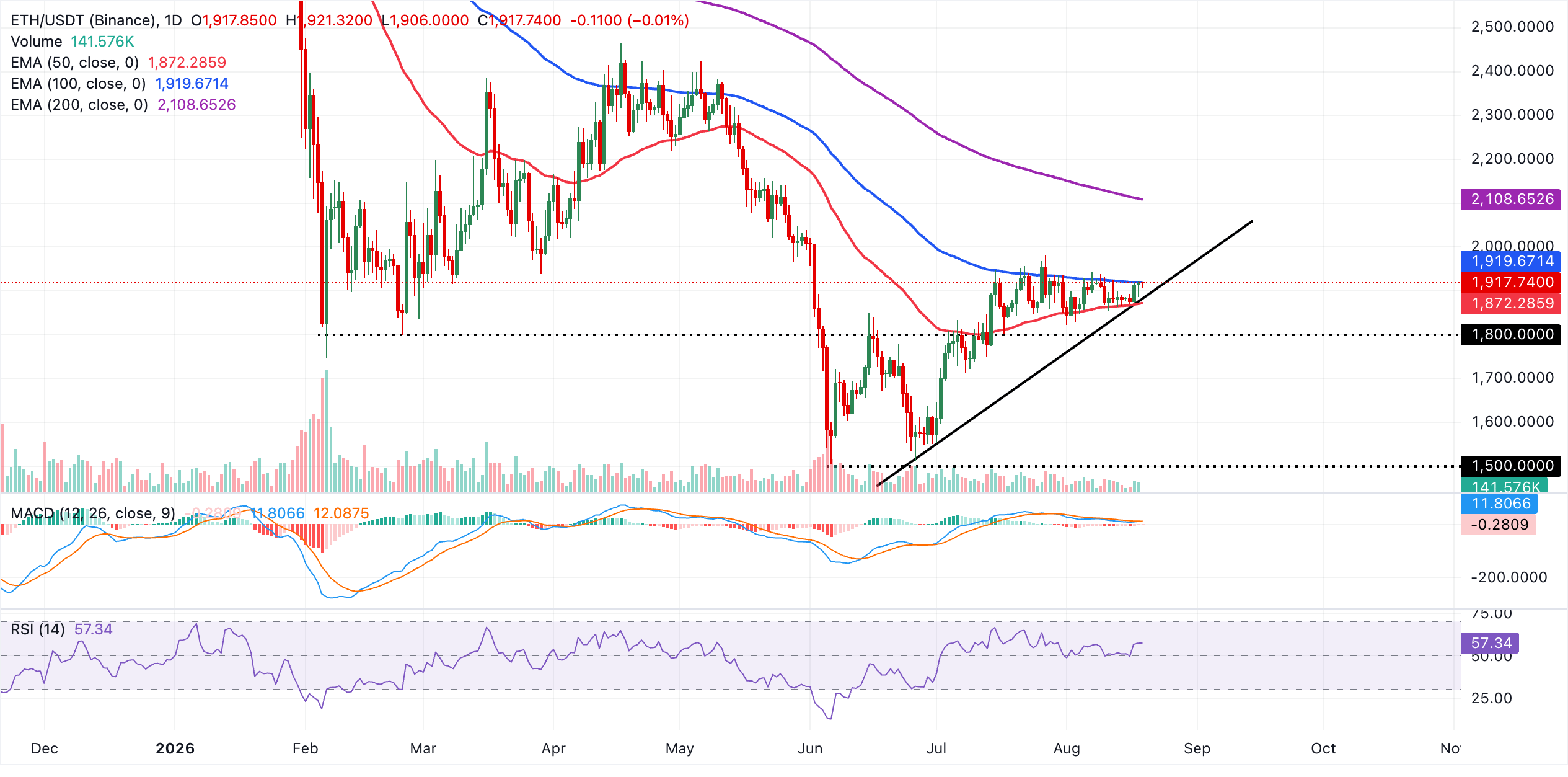
Immediate resistance sits at the 100-day EMA at $1,920, with a stronger barrier at the 200-day EMA near $2,109. Bulls would need a decisive daily close above the former to ease the current cap. On the downside, initial support is seen at the recent price pivot around $1,900, followed by the trendline floor near $1,885 and the 50-day EMA at $1,872, where a break lower would open the door to a deeper correction within the broader uptrend.
XRP, on the other hand, trades above $1.00, maintaining a bearish near-term bias as it holds below the 50-day, 100-day and 200-day EMA indicators. Momentum is modestly constructive, with the RSI Indicator recovering toward the 40 zone and the MACD edging up toward the zero line. Yet this only hints at waning downside pressure rather than a clear bullish shift while price remains capped by these overhead averages.
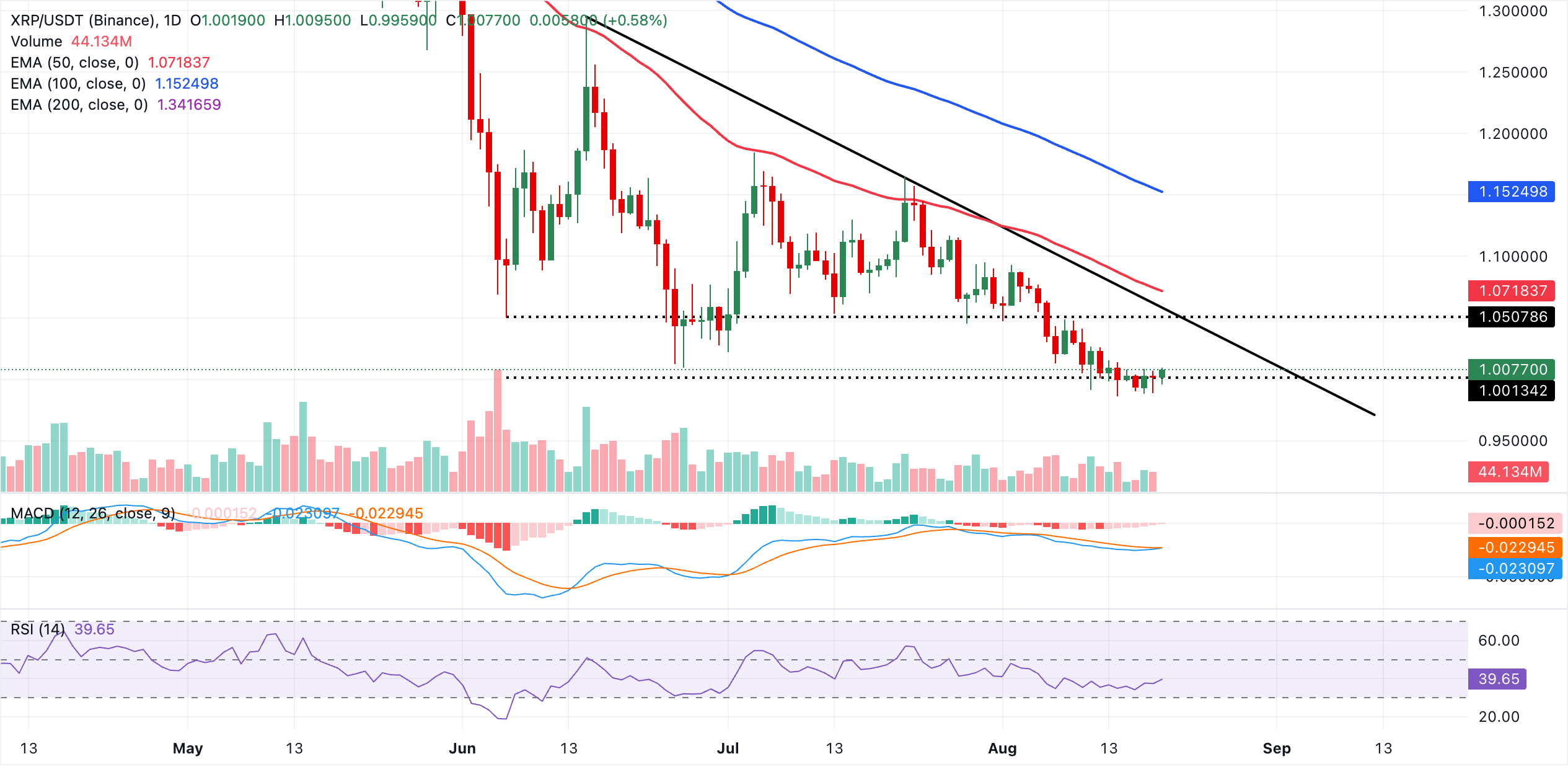
Initial resistance lies at the downward resistance trendline break price near $1.06, followed by the 50-day EMA at $1.07 as a secondary cap. Further up, the 100-day EMA at $1.15 and the 200-day EMA at $1.34 define a broader bearish structure, and the pair would need to reclaim these levels to meaningfully challenge the prevailing downtrend.
(The technical analysis of this story was written with the help of an AI tool. Know more.)
Crypto ETF FAQs
An Exchange-Traded Fund (ETF) is an investment vehicle or an index that tracks the price of an underlying asset. ETFs can not only track a single asset, but a group of assets and sectors. For example, a Bitcoin ETF tracks Bitcoin’s price. ETF is a tool used by investors to gain exposure to a certain asset.
Yes. The first Bitcoin futures ETF in the US was approved by the US Securities & Exchange Commission in October 2021. A total of seven Bitcoin futures ETFs have been approved, with more than 20 still waiting for the regulator’s permission. The SEC says that the cryptocurrency industry is new and subject to manipulation, which is why it has been delaying crypto-related futures ETFs for the last few years.
Yes. The SEC approved in January 2024 the listing and trading of several Bitcoin spot Exchange-Traded Funds, opening the door to institutional capital and mainstream investors to trade the main crypto currency. The decision was hailed by the industry as a game changer.
The main advantage of crypto ETFs is the possibility of gaining exposure to a cryptocurrency without ownership, reducing the risk and cost of holding the asset. Other pros are a lower learning curve and higher security for investors since ETFs take charge of securing the underlying asset holdings. As for the main drawbacks, the main one is that as an investor you can’t have direct ownership of the asset, or, as they say in crypto, “not your keys, not your coins.” Other disadvantages are higher costs associated with holding crypto since ETFs charge fees for active management. Finally, even though investing in ETFs reduces the risk of holding an asset, price swings in the underlying cryptocurrency are likely to be reflected in the investment vehicle too.
Recommended Articles








Comments (0)
Click the $ button, enter the symbol, and select to link a stock, ETF, or other ticker.